Collars · November 11, 2026
Best Collars for Cane Corsos: The Complete 2026 Buyer's Guide
7 min read · Colossal Canine Co.
Materials, width, buckles, sizing and durability — an honest buyer’s guide for a giant breed.
A Cane Corso is not a dog you outfit from the bargain bin. Adult males routinely stand 25 to 27.5 inches at the shoulder and weigh 100 pounds or more, with a neck and chest built like a linebacker. When a dog that powerful lunges, every weak point in its collar — the webbing, the buckle, the D-ring, the fasteners — gets tested at once. Choosing the best collar for a Cane Corso means understanding what actually holds up under that load, and what only looks tough on a product page.
This guide walks through materials, width, buckle construction, sizing and durability, compares the genuine alternatives fairly, and then explains where our own Colossal Canine collars fit in that picture.
The short answer
For most Cane Corso owners, the best everyday collar is a wide flat collar — around 1.5 inches — made from heavy-duty webbing or quality leather, with a metal buckle and a welded or heavy-gauge D-ring, sized so two fingers slip easily underneath. That combination spreads force across the neck, resists hardware failure, and carries ID tags securely. The sections below explain why, and where other styles genuinely make more sense.

Materials: an honest comparison
Nylon webbing
Heavy-duty nylon webbing is the workhorse material for large breeds. It is strong for its weight, does not rot when wet, dries quickly, and is easy to clean with soap and water. The quality range is enormous, though: thin single-layer webbing from a discount collar behaves nothing like the thick, tightly woven military grade webbing used in premium collars. Look for dense weave, substantial thickness, and edges that do not fray when you rub them. Webbing's weaknesses are cosmetic fading in strong sun and the fact that a determined chewer can destroy it — no fabric collar survives being left on a bored dog that treats it as a toy.
Leather
A full-grain leather collar is the traditional choice, and a good one genuinely lasts for years while developing character. Leather is comfortable against the coat and resists odor better than fabric. Its trade-offs are real: it needs occasional conditioning, it stiffens and cracks if repeatedly soaked and dried, and quality varies even more than webbing. Bonded or "genuine leather" collars made from glued scraps can split at the holes within months. If you choose leather, buy full-grain, wide, and thick — and expect to pay for it.
Biothane and coated webbing
Biothane-style coated webbing wraps a strong core in a waterproof polymer coating. It is the best option for dogs that swim, roll in mud, or live in wet climates, because it never absorbs water or smell and wipes clean in seconds. It is slightly stiffer than nylon, some dogs find it less comfortable in extreme cold, and the coating can eventually crack at tight bend points. For a Cane Corso that swims regularly, it is arguably the most practical material available.
Chain and prong collars
Slip chains and prong collars are training tools, not everyday collars. In experienced hands under professional guidance they can communicate clearly with a strong dog, but they apply concentrated pressure, can injure the neck if misused, and should never be left on an unattended dog. For daily wear, ID, and leash attachment on walks, a wide flat collar is the safer default for this breed.
Width: why 1.5 inches matters
Collar width is load distribution. When a 110-pound Cane Corso hits the end of a leash, a narrow 1-inch collar concentrates that force on a thin band of neck, while a 1.5-inch collar spreads it across roughly half again as much surface area. Wider collars also resist rolling and twisting on thick, muscular necks, and they simply look proportionate on a giant head. For an adult Cane Corso, 1.5 inches is the sweet spot; anything under 1 inch is undersized for the breed, and collars wider than 2 inches can restrict movement on all but the largest males.
Buckle construction and hardware
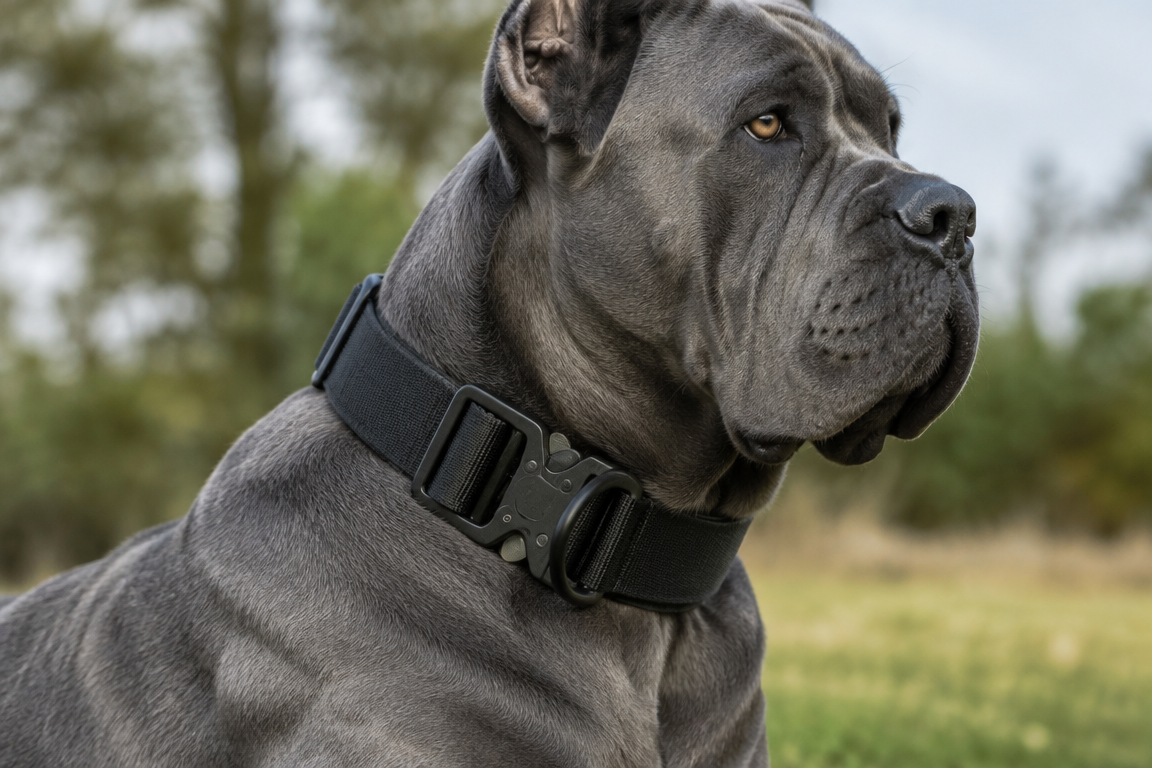
The buckle is where cheap collars fail first. Plastic side-release buckles are convenient, but molded plastic becomes brittle with age, UV exposure and cold, and a hard lunge can snap a low-quality clasp at exactly the wrong moment. For a dog of this size, metal hardware is the responsible choice.
Three buckle styles dominate heavy-duty collars. Traditional belt-style buckles in stainless steel or brass are simple, proven, and nearly impossible to release accidentally, though they are slower to fasten. Metal quick-release buckles combine one-handed operation with metal strength — look for solid construction rather than thin stamped parts. AustriAlpin-style Cobra buckles are the premium option, originally designed for load-bearing safety gear, and priced accordingly.
Check the rest of the hardware with the same eye. The D-ring that takes the leash should be welded or heavy-gauge, not thin wire. Fasteners matter too: reinforced Chicago screws or solid rivets at the stress points hold up better than stitching alone, because thread can chafe and rot while a metal fastener does not. Stainless steel resists rust indefinitely; coated black hardware looks sharp but check that the coating is durable rather than paint.
Sizing a Cane Corso correctly
Never guess from weight alone — two Corsos of the same weight can carry very different necks. Run a soft measuring tape around the middle of the neck where the collar will sit, snug but not tight, and note the number. The finished collar should fasten so two fingers slide easily underneath: loose enough for comfort, tight enough that the dog cannot back out of it.
Many adult Cane Corsos measure somewhere around 18 to 26 inches, but individuals fall outside that range in both directions, which is why a collar line that stops at 24 or 26 inches leaves some of the breed unserved. Puppies deserve special mention: a Corso puppy grows through several collars in its first year, so buy for today's measurement, check fit weekly, and budget for the next size up rather than buying a huge collar to grow into. A collar a puppy can slip over its head is a collar that fails when it matters.
Durability: what actually wears out
Even the best collar is a wear item. Inspect it monthly: run the webbing between your fingers feeling for thin spots and frayed edges, flex the buckle and listen for gritty movement, check the D-ring for elongation, and confirm fasteners have not loosened. Salt water, constant sun and machine washing all shorten service life. Replace the collar when any component shows real wear — the cost of a new collar is trivial next to the cost of a loose Cane Corso.
Where Colossal Canine collars fit
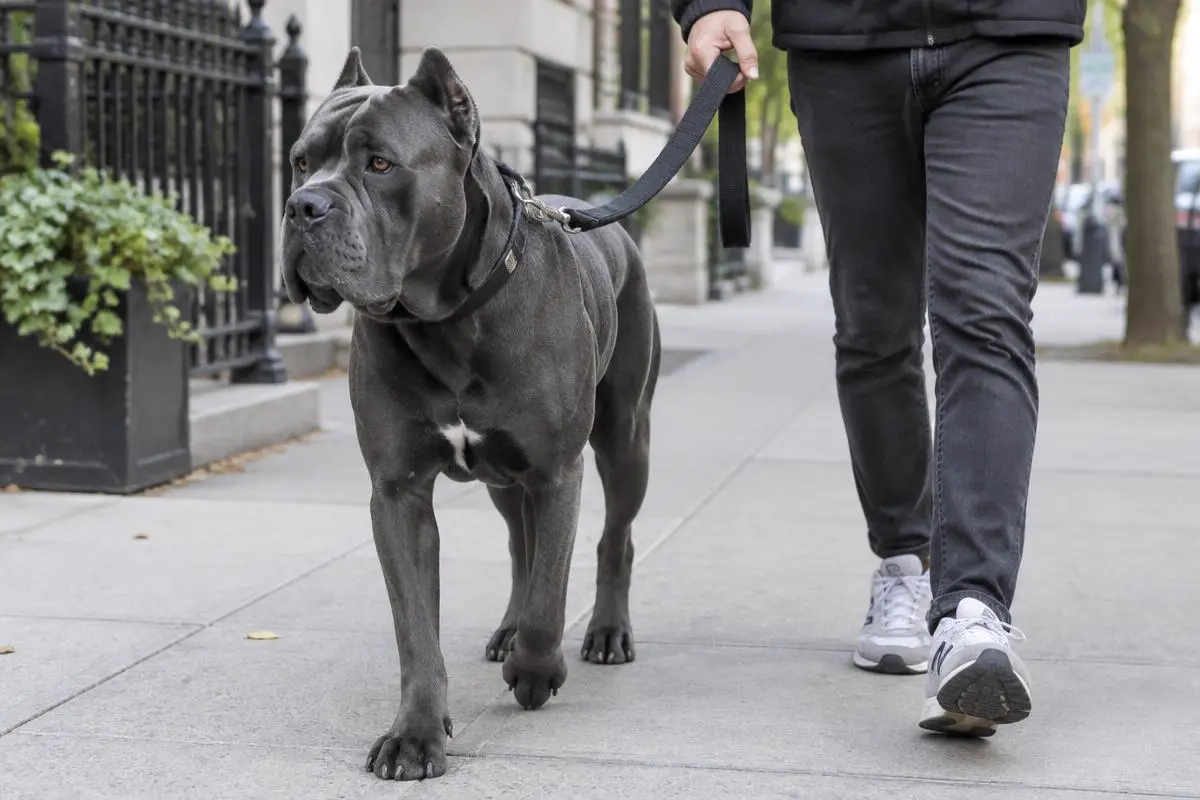
Full transparency: we make collars, so weigh this section accordingly. Colossal Canine Co. exists because the giant-breed market is underserved — most collar lines top out exactly where breeds like the Cane Corso begin. Our collars are built from heavy-duty military grade webbing, 1.5 inches wide, with heavy-gauge hardware in stainless steel or black, and they are handmade to order in the USA in neck sizes from 18 to 32 inches — with puppy sizes of 12, 14 and 16 inches for young Corsos still growing into their adult frame. Every collar is backed by our lifetime guarantee.
That makes our collars a strong fit if you want a wide webbing collar with metal hardware sized for a giant neck, in solid colors or camo patterns, with optional personalization built into the webbing. They are not the right answer if your heart is set on full-grain leather, if your dog swims daily and you want coated webbing, or if you need a specialized training collar — in those cases the alternatives above are genuinely better choices, and we would rather tell you that than sell you the wrong collar.
If you are still learning the breed itself — temperament, exercise needs, and what life with a Corso actually involves — our Cane Corso breed guide covers the dog behind the collar.
Frequently asked questions
What size collar does a Cane Corso need?
Measure the neck where the collar sits and add room for two fingers underneath. Many adults fall around 18 to 26 inches, but always measure your own dog rather than ordering from a breed average.
Is a harness better than a collar for a Cane Corso?
A well-fitted harness can reduce neck strain for strong pullers during training, but a wide flat collar remains the standard for ID tags and everyday wear. Many owners use both: collar for tags, harness for controlled walks while leash manners are a work in progress.
How tight should a Cane Corso's collar be?
Snug enough that two fingers slide underneath easily, and tight enough that it cannot slip over the head when the dog backs up. Check fit weekly on growing puppies and after any significant weight change in adults.
How often should I replace the collar?
Inspect monthly and replace when you find frayed webbing, a gritty or loose buckle, an elongated D-ring, or loose fasteners. With quality materials and normal use, a heavy-duty collar should serve for years rather than months.