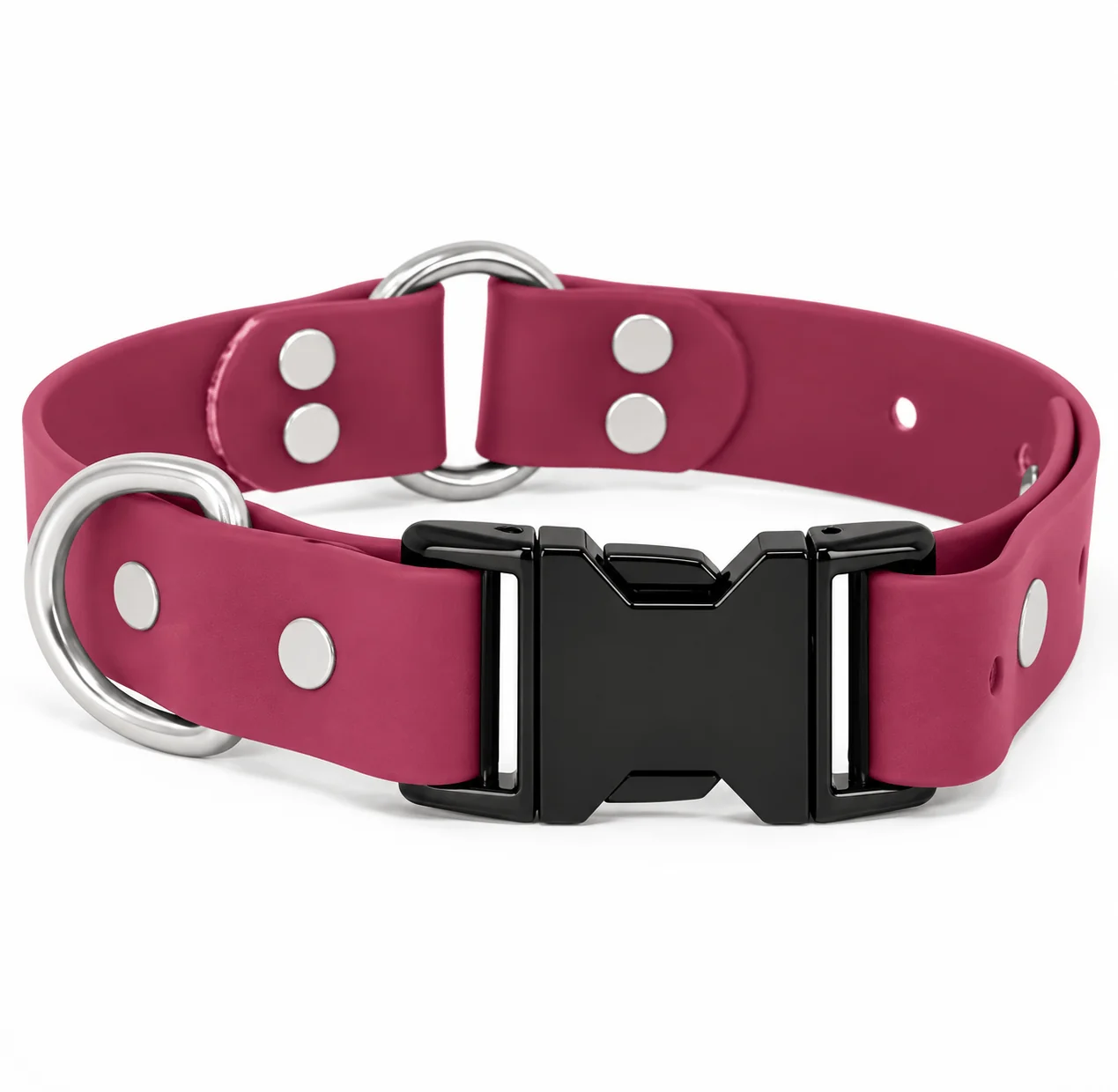
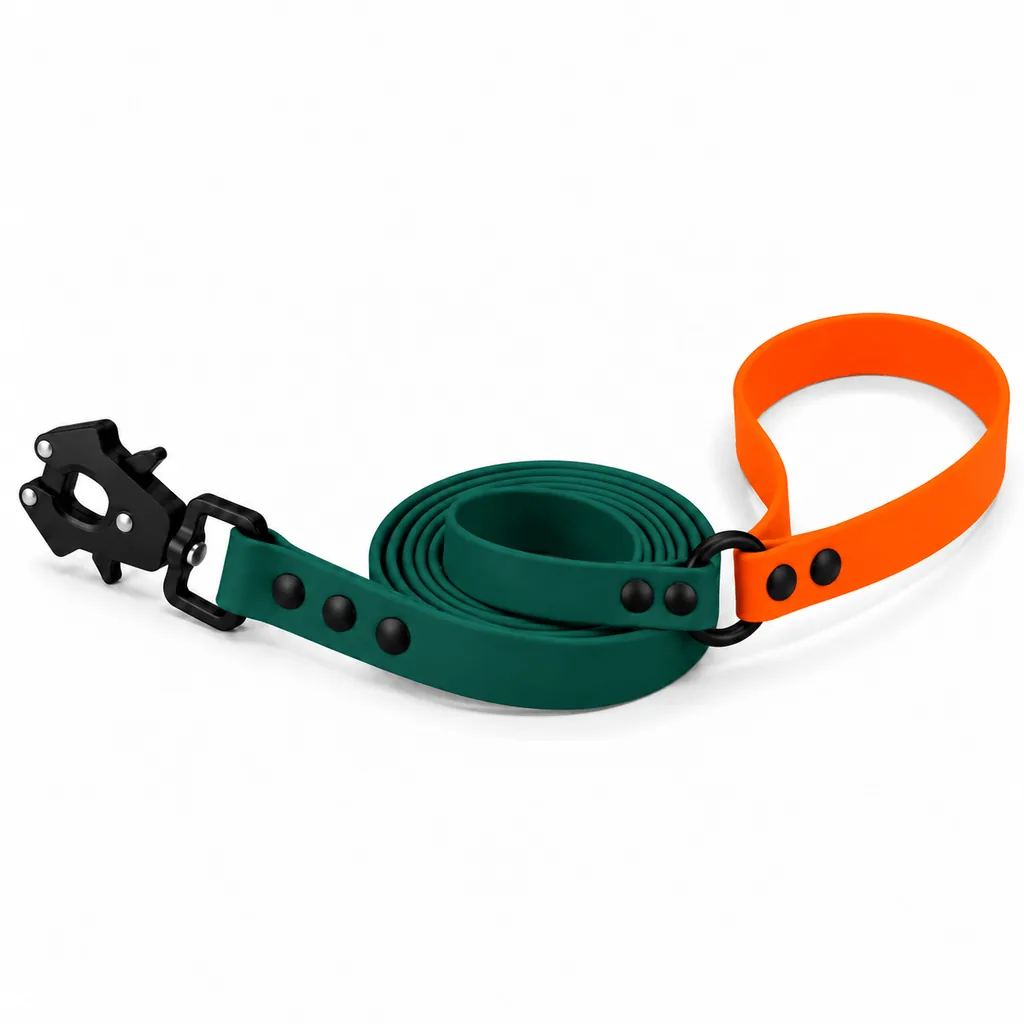
Heavy-Duty Collars and Leashes for Bloodhounds
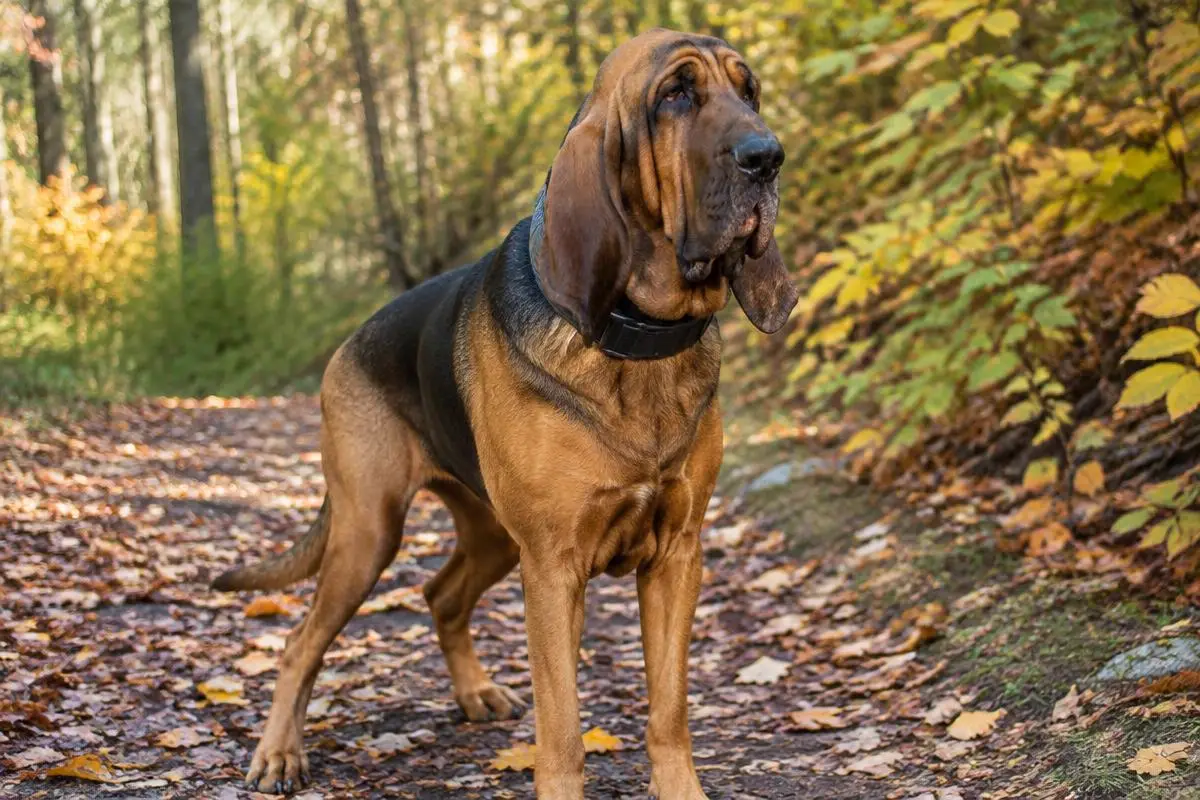
The Bloodhound is the most famous nose in the dog world. Developed centuries ago in the Ardennes region of Belgium and refined in England, this gentle, droopy-eared hound was bred to follow a single scent trail for miles without giving up. Today Bloodhounds still work alongside police and search-and-rescue teams, and their tracking evidence has even been accepted in court. At home they are affectionate, patient and famously stubborn companions who weigh up to 110 pounds.
That combination of size, determination and a nose that switches off the rest of the world is exactly why Bloodhound owners need gear that will not give out. When your hound locks onto a scent, you are no longer walking a dog; you are holding on to a tracking machine.
- Weight
- 80–110 lb
- Height
- 23–27 in
- Typical neck
- 20–26 in
- Lifespan
- 10–12 years
- Origin
- Belgium / England
- Group
- Hound
Why Bloodhounds need sturdy dog collars and leashes
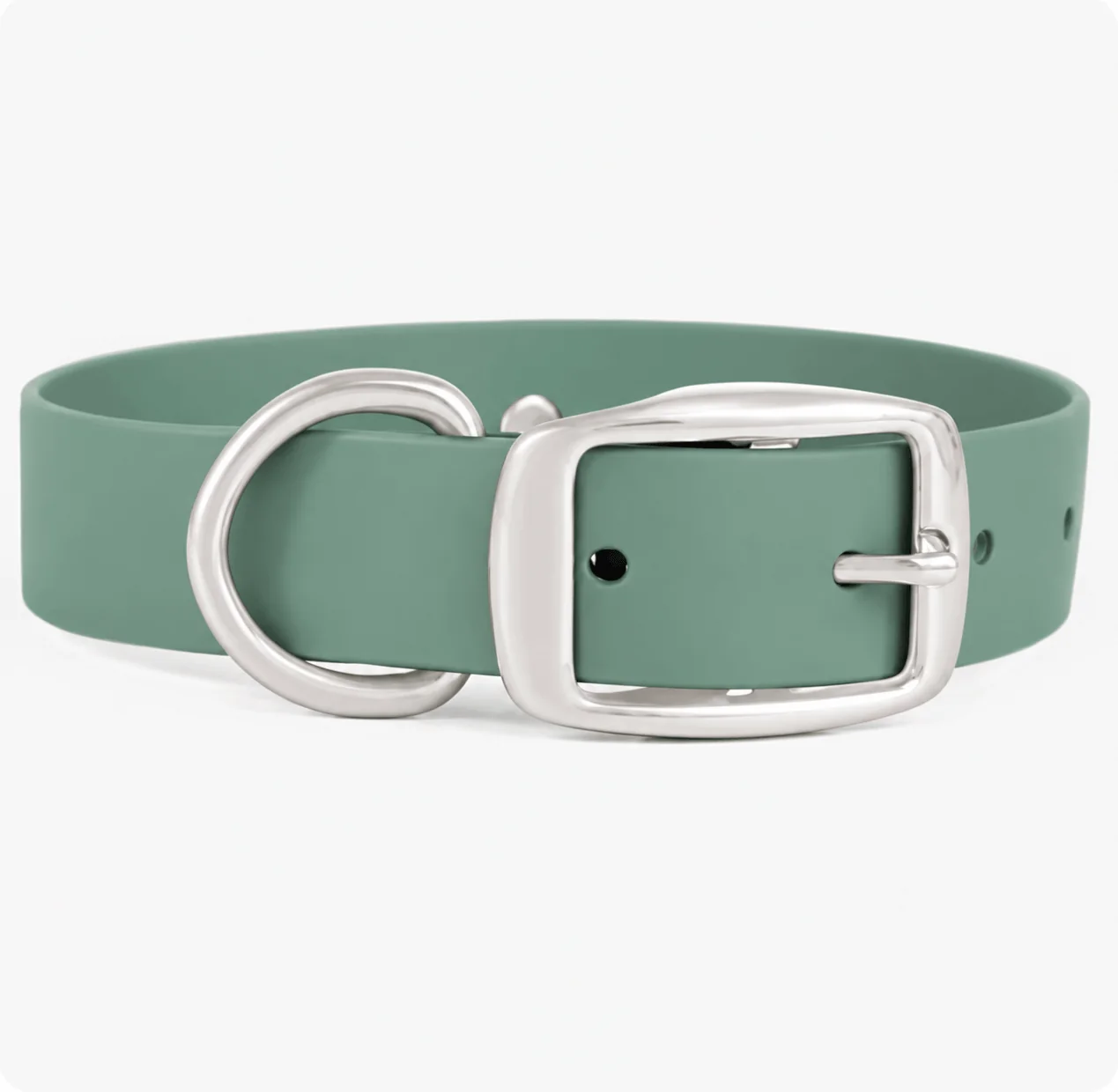
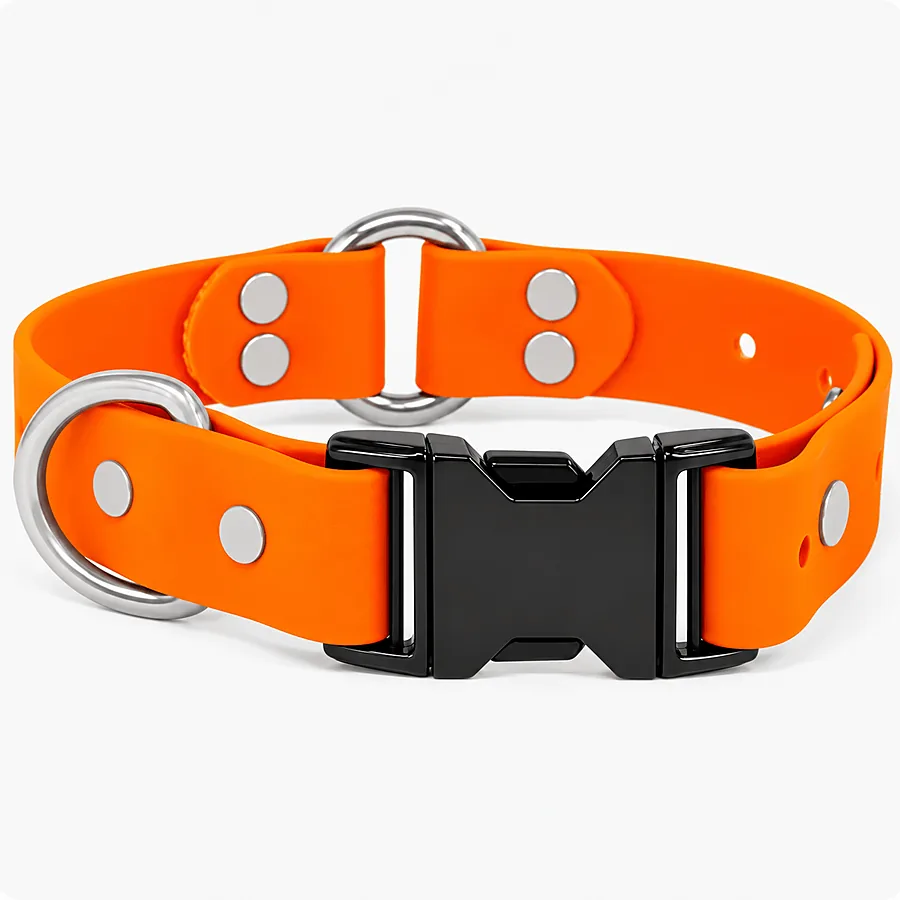
A Bloodhound on a scent puts steady, relentless pressure on the collar and leash for minutes at a time. Unlike a dog that lunges once and stops, a hound will lean into the lead, nose down, for the length of the trail. Thin webbing stretches and frays under that sustained load, stitching works loose and cheap buckles fatigue. A heavy-duty collar built from military grade webbing spreads that pressure across a wider area of the neck, which is both safer and more comfortable for the dog.
Bloodhounds also have loose skin and deep wrinkles around the neck. A narrow collar can roll, pinch and sink into the folds. A wide, well-finished collar sits flat on top of the skin, stays where you put it, and keeps the leash ring easy to find.
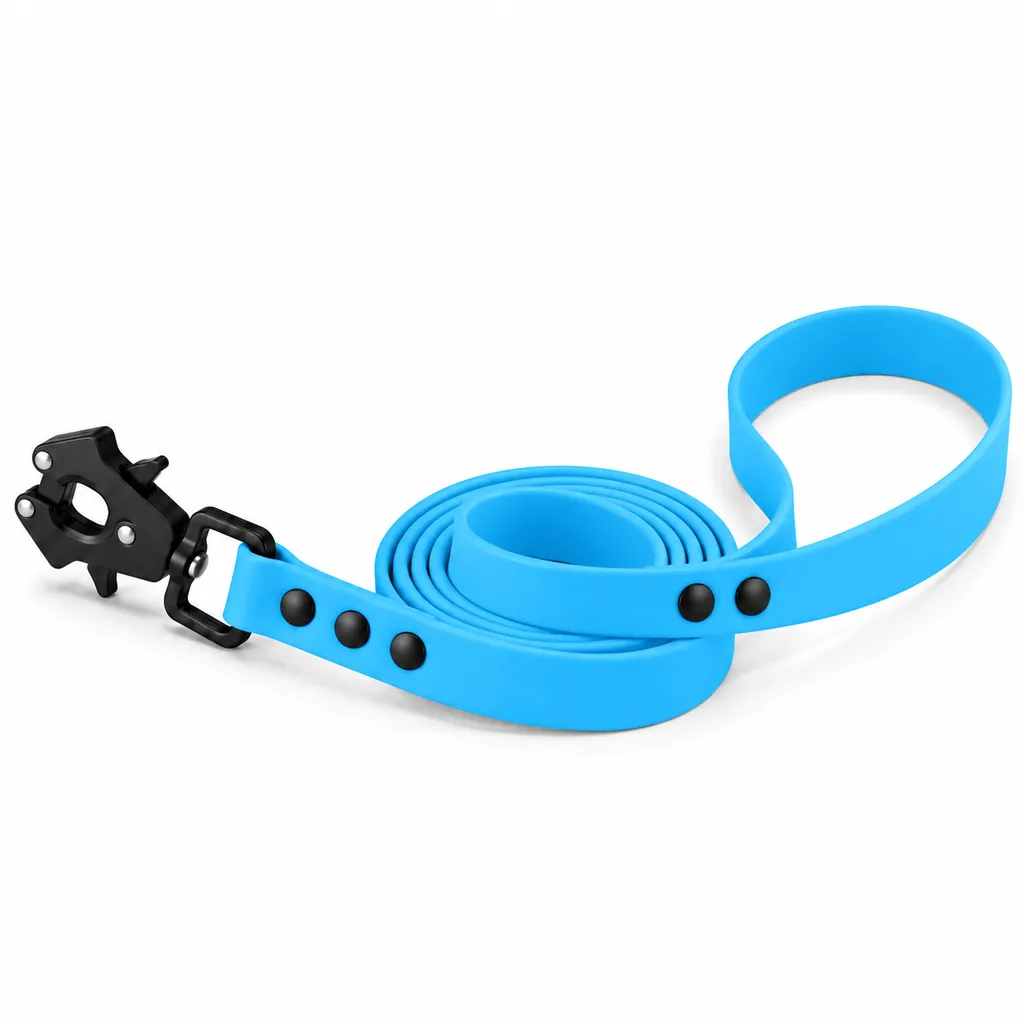
Finally, a Bloodhound that slips its collar will follow its nose straight across roads and fields, and it will not come back when called. Solid hardware and a leash rated for a 1,000 lb break strength are not a luxury for this breed; they are the difference between a good walk and a lost dog.
Bloodhound collar sizing
Most adult Bloodhounds wear a 20 to 26 inch collar, with males at the upper end. Because of the loose skin around the throat, measure with the dog standing and the head level, and make sure you are not measuring over a fold. A 6 ft leash gives you control on sidewalks, while a 10 ft leash gives a tracking hound room to work a scent in open areas.
To measure for a dog collar for Bloodhound, wrap a soft tape measure around the middle of the neck where the collar naturally sits, then slide two fingers under the tape. That number is your neck size. Giant breeds carry thick fur, loose skin and heavy muscle around the throat, so always measure rather than guessing from weight. If your dog falls between two sizes, choose the larger one; every Colossal collar adjusts down so you can dial in a snug, comfortable fit. Re-measure puppies every two to three weeks, because a giant puppy can add an inch of neck in less than a month.
6 ft or 10 ft leash for your Bloodhound?
Choosing between a 6 ft and a 10 ft leash comes down to where you walk. A 6 ft leash keeps a giant dog close at your side on sidewalks, in parking lots, at the vet and anywhere traffic or other dogs are nearby, which is where control matters most. A 10 ft leash gives your dog room to sniff, explore and practice recall in parks, on trails and in open fields while still keeping a secure connection. Many giant breed owners keep both by the door. Whichever length you choose, hold the handle with your hand through the loop and a second hand lower on the leash, so a sudden lunge pulls against your body instead of your wrist.
Bloodhound health
Like most deep-chested giant breeds, Bloodhounds are prone to bloat (gastric dilatation-volvulus), a life-threatening emergency. Feed two or three smaller meals a day, avoid hard exercise for an hour after eating, and learn the warning signs: a swollen belly, unproductive retching and restlessness.
Their long ears and facial wrinkles trap moisture and debris, so ear infections and skin fold irritation are common. Wipe the folds and check the ears weekly. Hip and elbow dysplasia and eye conditions such as entropion and ectropion also appear in the breed, so ask any breeder for health screening results.
Training your Bloodhound
Bloodhounds are intelligent but independent, and they were bred to make their own decisions on the trail. Short, positive, food-motivated sessions work best. Teach a rock-solid loose-leash walk early, while your puppy is still small enough to manage, and never rely on recall in an unfenced area. Many owners find that scent games and mantrailing classes channel the breed's instincts beautifully.
Exercise needs
Plan on at least an hour of activity a day. Long sniff walks are more tiring for a Bloodhound than fast running, because working the nose engages the brain. A securely fenced yard is essential; these dogs are skilled escape artists when a good smell is on the other side.
Grooming and care
The short coat needs only a weekly brush, but Bloodhounds drool generously, so keep a towel by the door. Clean ears and wrinkles weekly, trim nails regularly, and wash collars often since drool and outdoor scents collect quickly on webbing.
Fun facts about the Bloodhound
- A Bloodhound's nose has an estimated 230 million scent receptors, roughly 40 times more than a human.
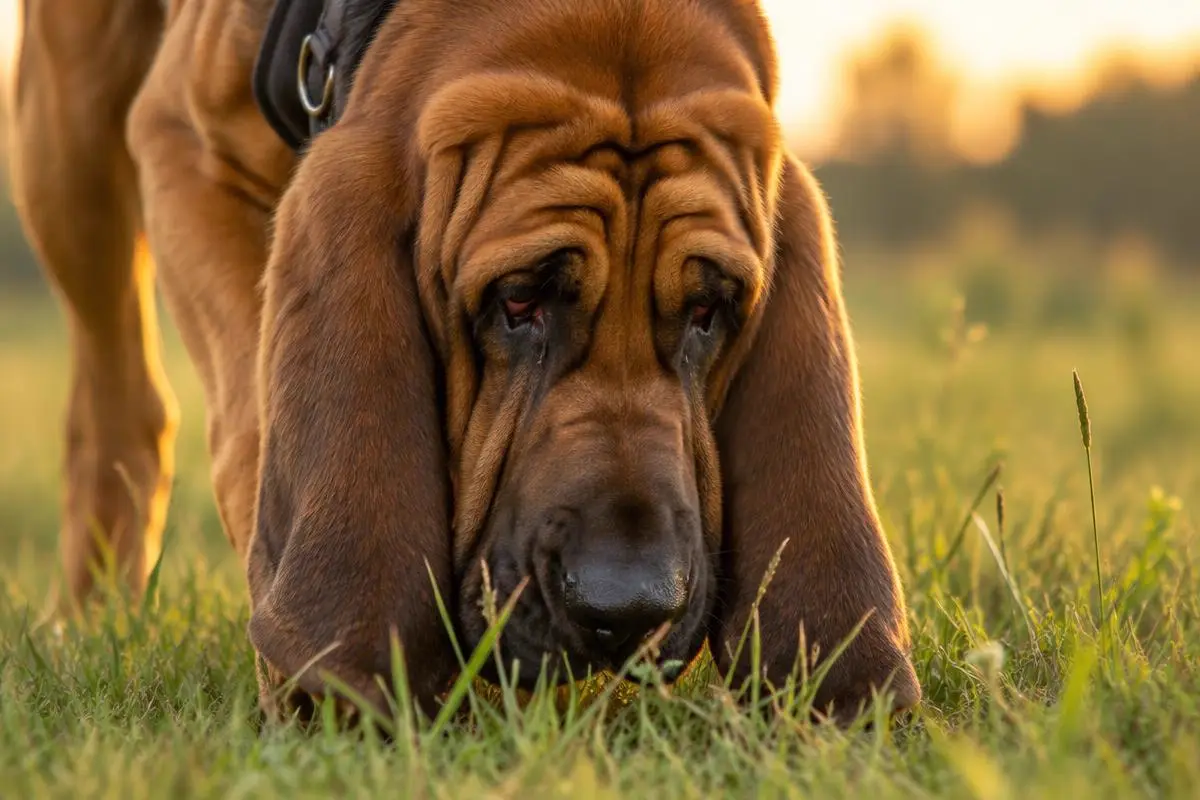
- The long ears drag along the ground and help sweep scent particles up toward the nose.
- Bloodhounds have successfully followed scent trails more than 300 hours old.
- The name is believed to come from 'blooded hound', meaning a hound of pure, aristocratic breeding.
Caring for your Bloodhound's collar and leash
Good gear lasts longer with a little care. Check your dog's collar and leash every few weeks for frayed edges, loose stitching or worn hardware, and look at the skin under the collar for redness or rubbing. Hand wash webbing in warm, soapy water, rinse well and let it air dry; avoid harsh bleach that can weaken fibers. Take the collar off during unsupervised crate time and rough play with other dogs to prevent snags. A properly fitted collar should be snug enough that it cannot slip over the head but loose enough to fit two fingers underneath.
Built for giants like yours
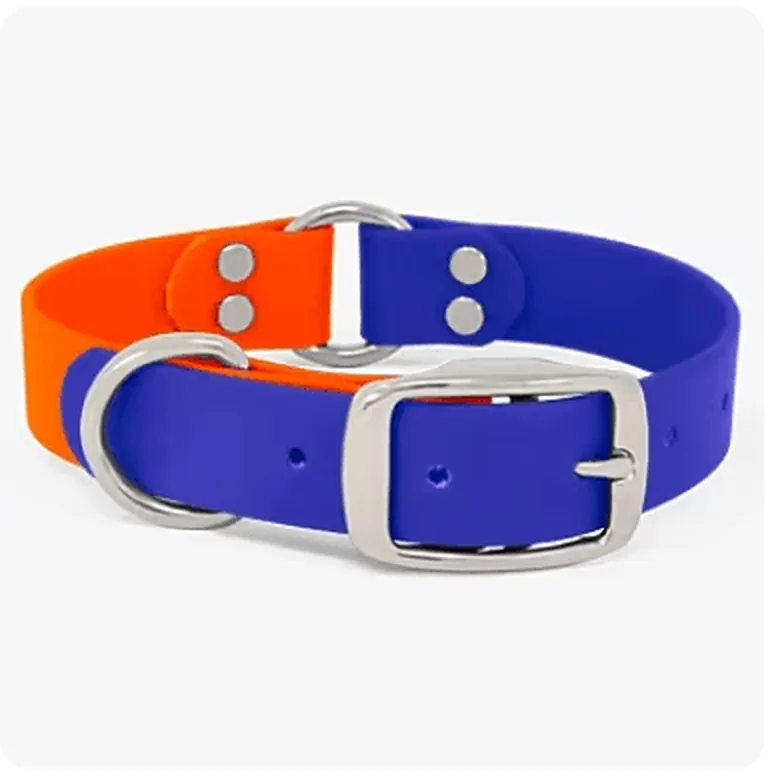
Every Colossal Canine Co. collar and leash is handmade to order in the USA from military grade webbing, heavy-gauge stainless steel or black hardware and Chicago style tacks placed where the load lands. Our leashes are rated for a 1,000 lb break strength, and everything we build is backed by a lifetime guarantee. Shipping is free on orders over $75 and a flat $7.95 below that, across the continental 48 states.
Bloodhound gear FAQ
What size collar does a Bloodhound need?
Most adults need a 20 to 26 inch collar. Measure the middle of the neck and add two fingers of room.
Is a 6 ft or 10 ft leash better for a Bloodhound?
Use a 6 ft leash for everyday walks near traffic and a 10 ft leash for tracking practice and open fields.
Can a Bloodhound be trusted off leash?
Rarely. Once a Bloodhound picks up a scent it will follow it, so keep your hound on a strong leash outside fenced areas.