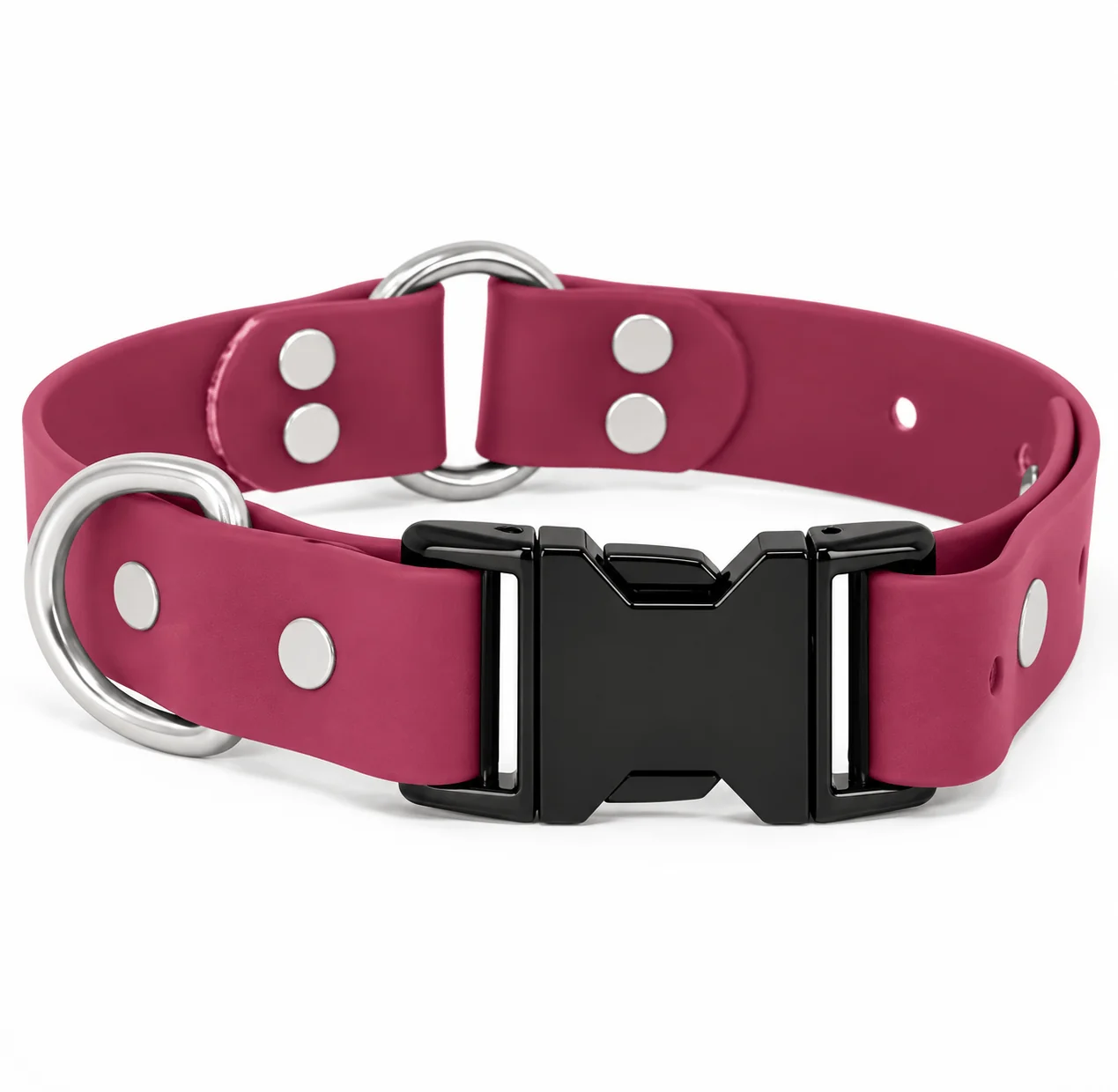
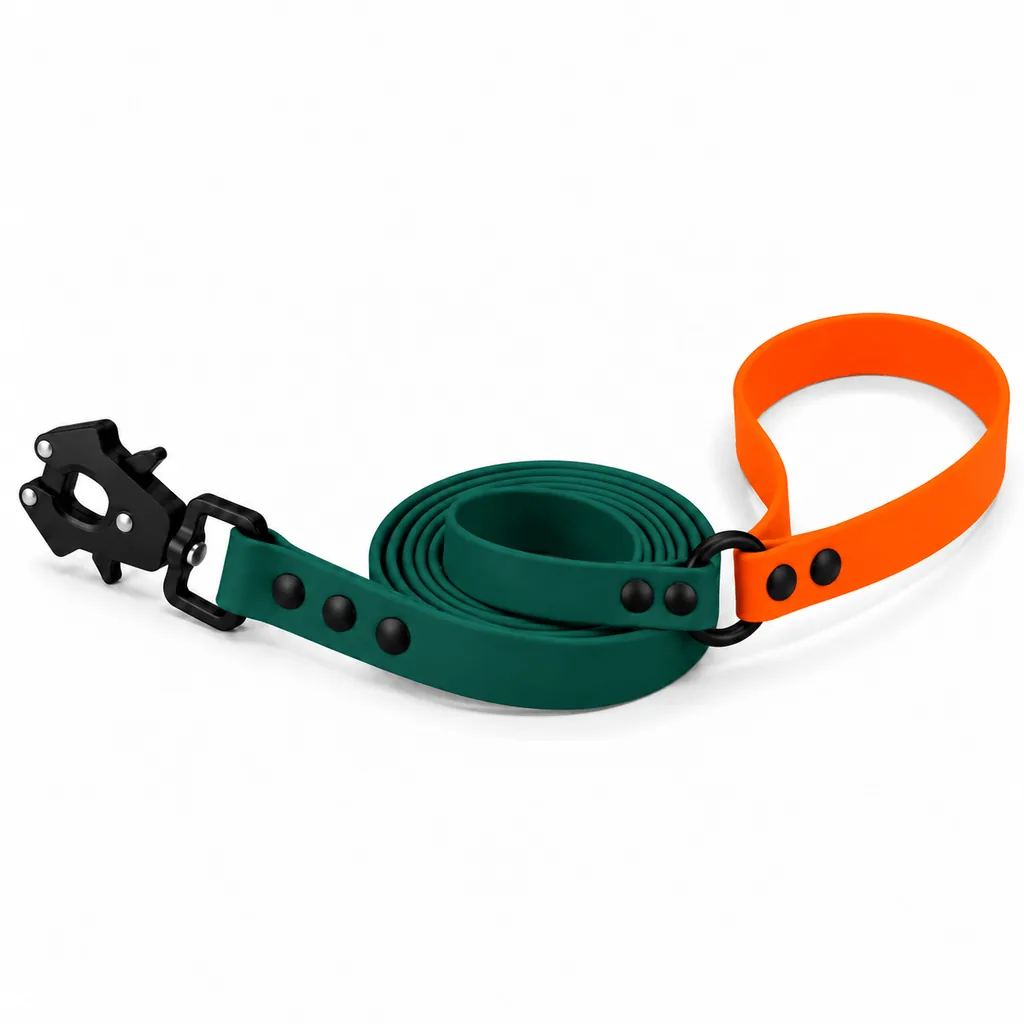
Heavy-Duty Collars and Leashes for Rottweilers
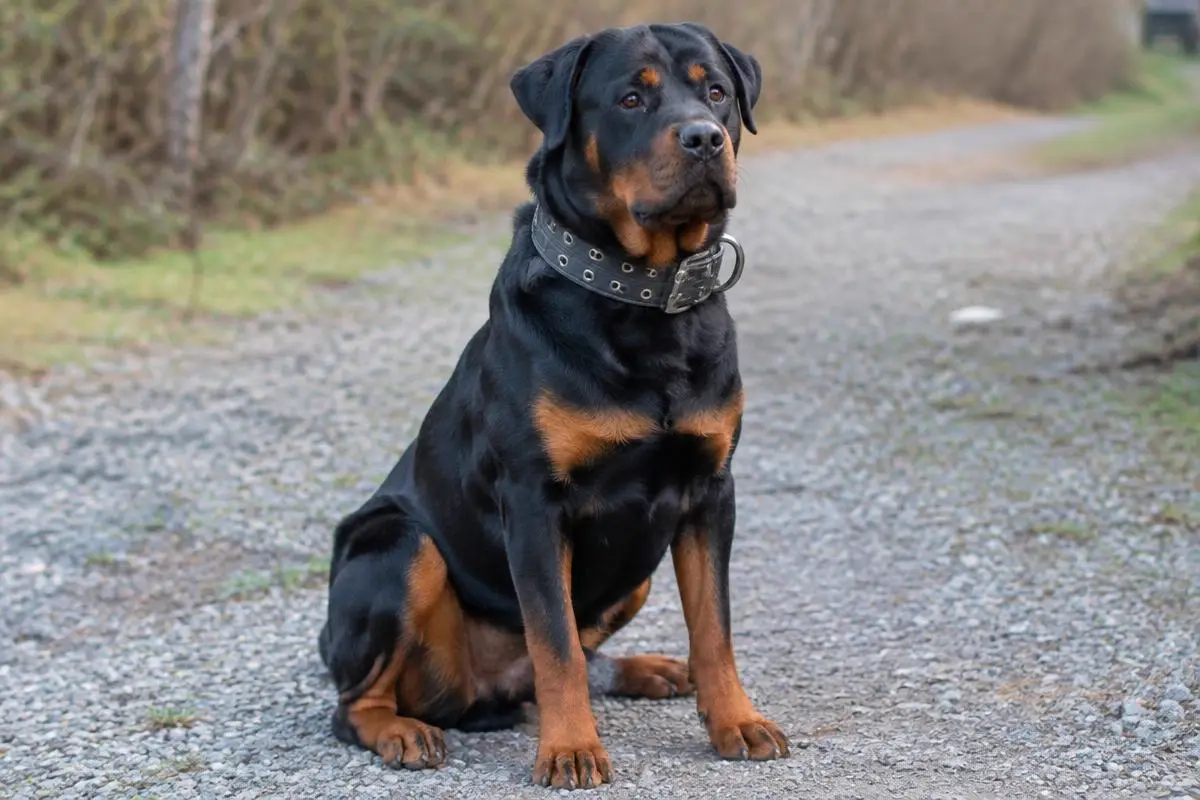
The Rottweiler traces its roots to Roman drover dogs that marched cattle across the Alps. The breed was refined in the German market town of Rottweil, where butchers used the dogs to drive livestock to market and pull meat carts, earning the nickname 'Rottweiler Metzgerhund', the butcher's dog of Rottweil.
Today Rottweilers serve as police dogs, service dogs, therapy dogs and devoted family guardians. They are confident, intelligent and loyal, and they are among the strongest dogs for their size, with males weighing up to 135 pounds of solid muscle.
- Weight
- 80–135 lb
- Height
- 22–27 in
- Typical neck
- 20–28 in
- Lifespan
- 9–10 years
- Origin
- Germany
- Group
- Working
Why Rottweilers need sturdy dog collars and leashes
A Rottweiler's power comes from a broad chest, heavy bone and a thick, muscular neck. When a Rottie lunges, the force is concentrated and sudden. Standard collars with thin buckles and light D-rings can bend or break under that load, and an escaped Rottweiler is a serious liability for any owner.
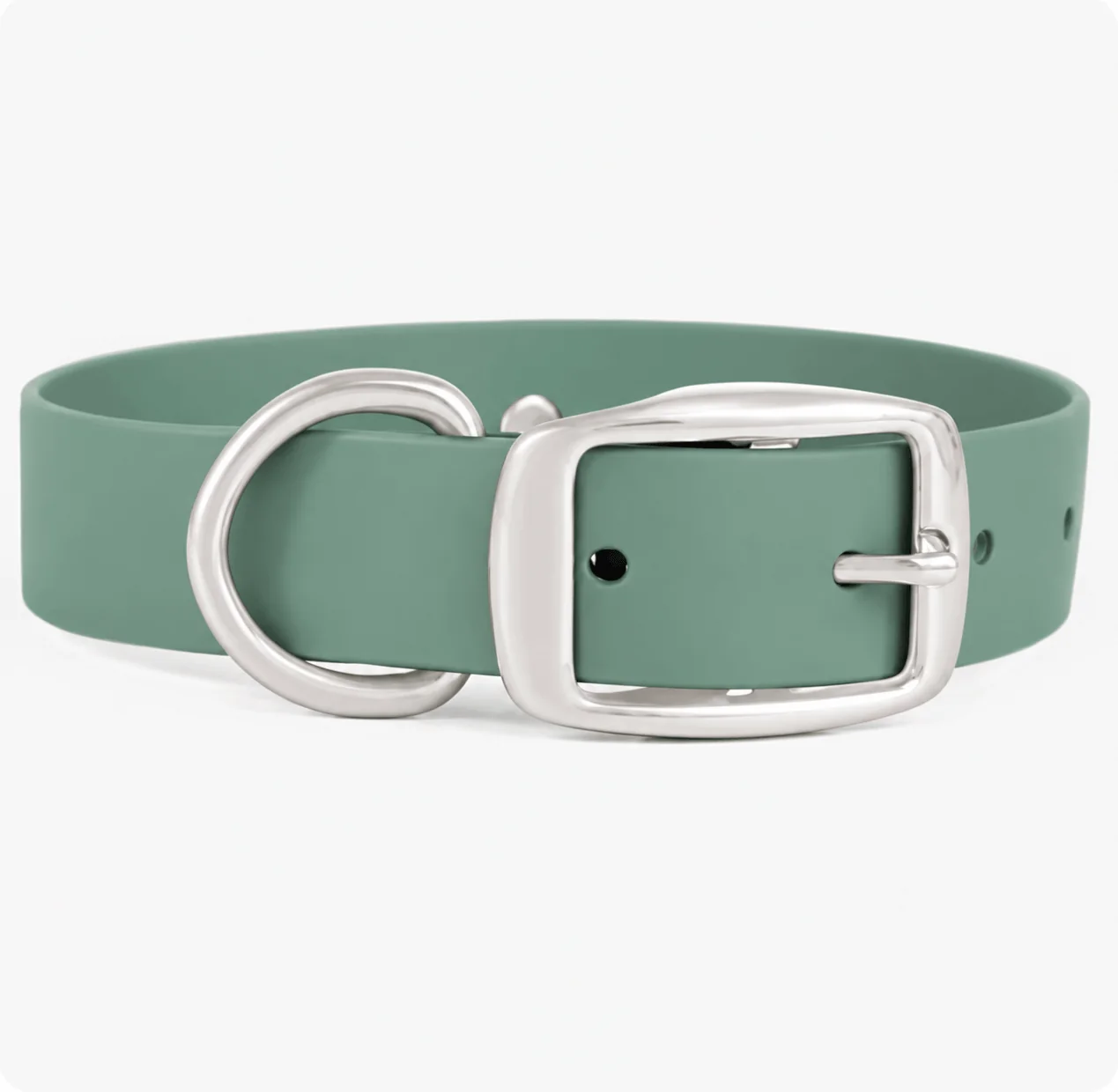
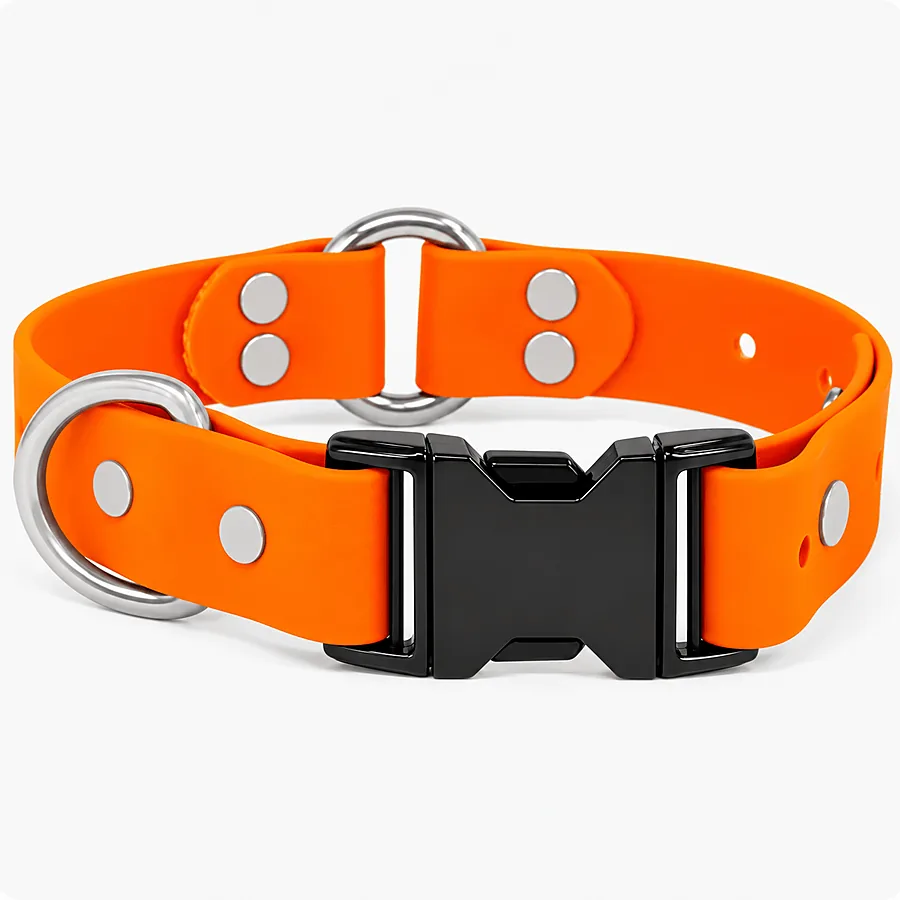
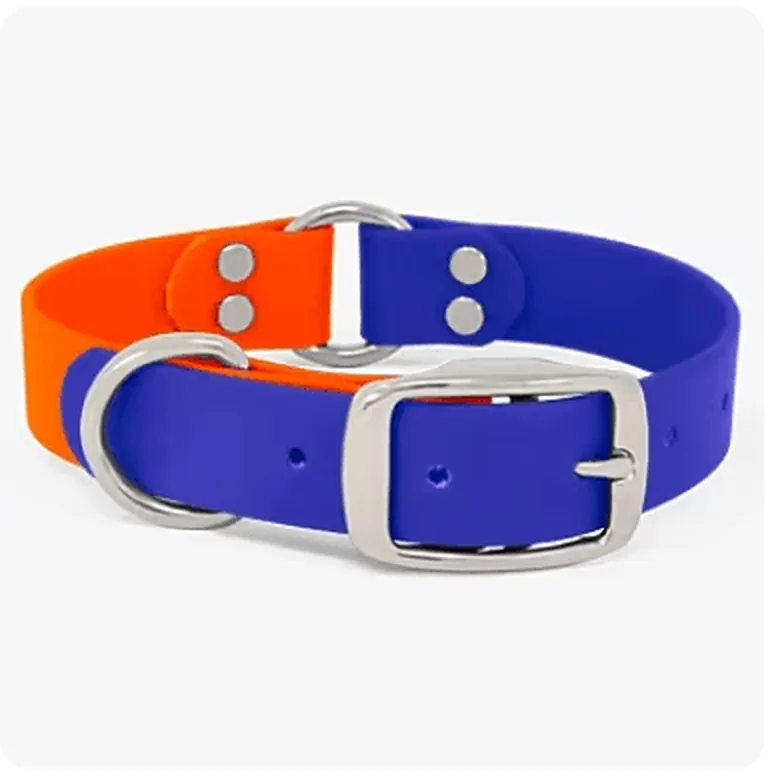
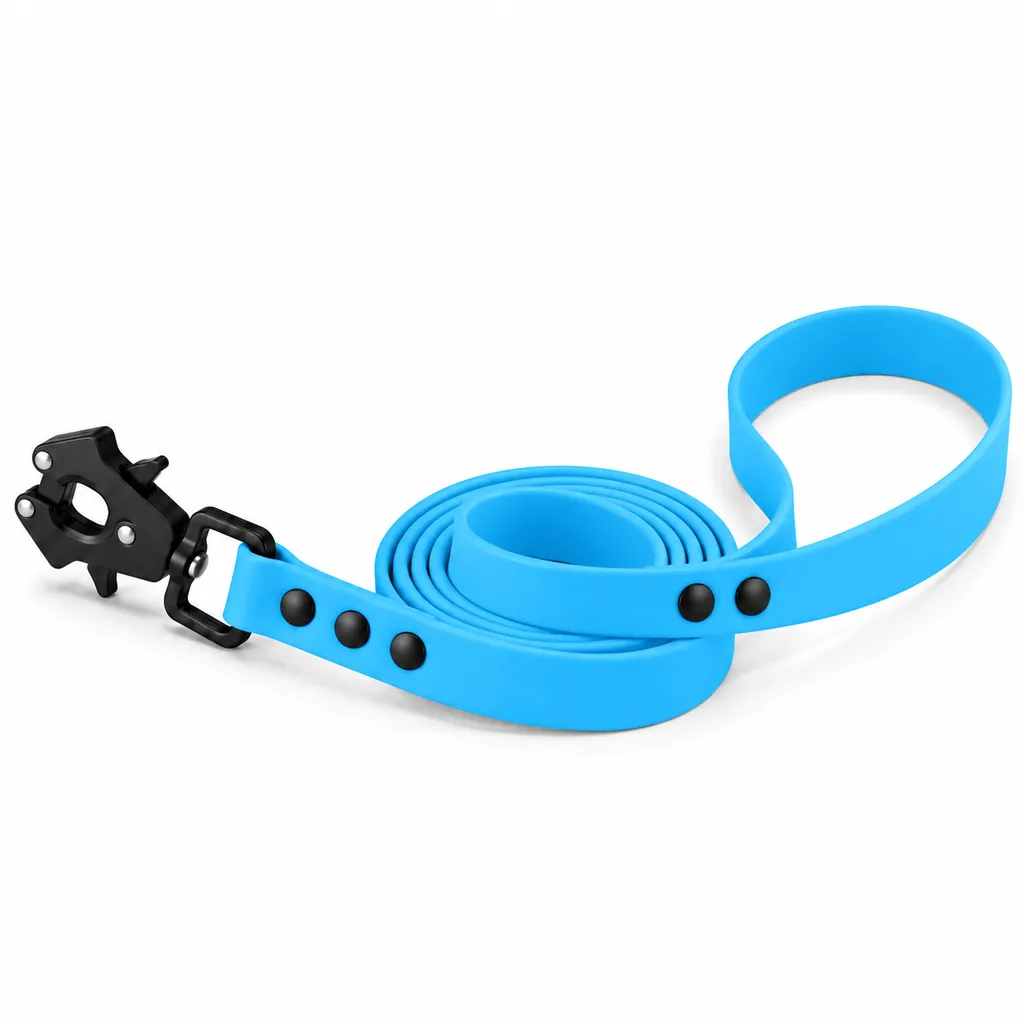
Rottweilers are working dogs that thrive on training, and training means hours of leash work. A collar of military grade webbing with Chicago style tacks and a leash rated for a 1,000 lb break strength will stand up to daily obedience practice without stretching or wearing out.
Because Rottweilers face unfair stereotypes, owners often feel extra responsibility to show complete control in public. Reliable, strong gear helps you do exactly that.
Rottweiler collar sizing
Most adult Rottweilers wear a 20 to 28 inch collar, with males typically 24 inches or more. Measure mid-neck and add two fingers. Rottweiler puppies grow quickly between three and ten months, so re-check fit regularly.
To measure for a dog collar for Rottweiler, wrap a soft tape measure around the middle of the neck where the collar naturally sits, then slide two fingers under the tape. That number is your neck size. Giant breeds carry thick fur, loose skin and heavy muscle around the throat, so always measure rather than guessing from weight. If your dog falls between two sizes, choose the larger one; every Colossal collar adjusts down so you can dial in a snug, comfortable fit. Re-measure puppies every two to three weeks, because a giant puppy can add an inch of neck in less than a month.
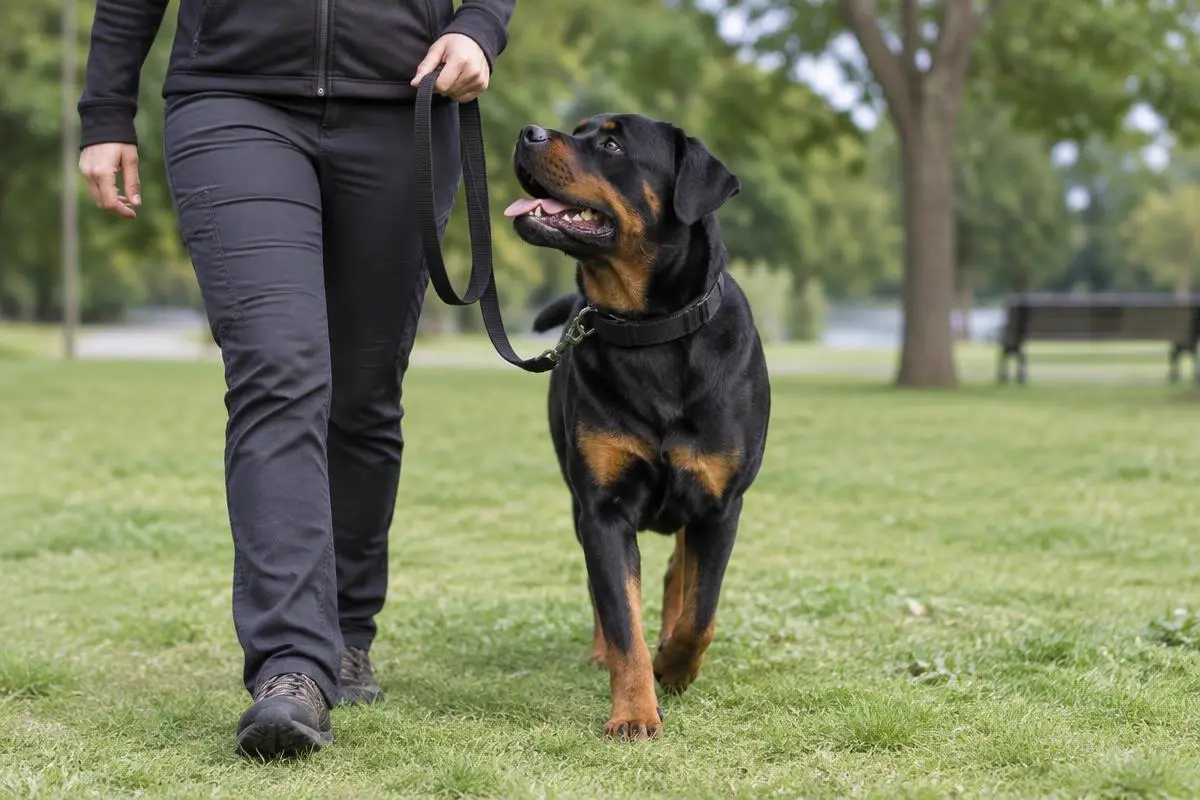
6 ft or 10 ft leash for your Rottweiler?
Choosing between a 6 ft and a 10 ft leash comes down to where you walk. A 6 ft leash keeps a giant dog close at your side on sidewalks, in parking lots, at the vet and anywhere traffic or other dogs are nearby, which is where control matters most. A 10 ft leash gives your dog room to sniff, explore and practice recall in parks, on trails and in open fields while still keeping a secure connection. Many giant breed owners keep both by the door. Whichever length you choose, hold the handle with your hand through the loop and a second hand lower on the leash, so a sudden lunge pulls against your body instead of your wrist.
Rottweiler health
Rottweilers are prone to hip and elbow dysplasia, cruciate ligament tears, aortic stenosis and osteosarcoma (bone cancer). Keeping your Rottie lean is one of the best ways to protect its joints.
Bloat can also affect Rottweilers. Feed two or more smaller meals a day and avoid vigorous exercise around mealtimes.
Training your Rottweiler
Rottweilers are highly trainable and excel in obedience, tracking, herding and protection sports. Early, consistent socialization is vital. Use firm, fair, reward-based training, and give your Rottweiler a job; they are happiest with structure and purpose.
Exercise needs
Plan on at least an hour of exercise daily, combining walks, play and mental challenges. Rottweilers enjoy hiking, fetch and dog sports. Puppies should avoid long runs until their joints mature.
Grooming and care
The short double coat sheds moderately year-round and more in spring and fall. Brush weekly, trim nails, clean ears and brush teeth. Rotties are relatively low-maintenance groomers.
Fun facts about the Rottweiler
- Rottweilers once carried money pouches around their necks for butchers returning from market.
- The breed was among the first used as police dogs in Germany.
- Rottweilers are consistently ranked among the ten most popular breeds in the United States.
- Every purebred Rottweiler has the same black and tan (mahogany or rust) coat pattern.
Caring for your Rottweiler's collar and leash
Good gear lasts longer with a little care. Check your dog's collar and leash every few weeks for frayed edges, loose stitching or worn hardware, and look at the skin under the collar for redness or rubbing. Hand wash webbing in warm, soapy water, rinse well and let it air dry; avoid harsh bleach that can weaken fibers. Take the collar off during unsupervised crate time and rough play with other dogs to prevent snags. A properly fitted collar should be snug enough that it cannot slip over the head but loose enough to fit two fingers underneath.
Built for giants like yours
Every Colossal Canine Co. collar and leash is handmade to order in the USA from military grade webbing, heavy-gauge stainless steel or black hardware and Chicago style tacks placed where the load lands. Our leashes are rated for a 1,000 lb break strength, and everything we build is backed by a lifetime guarantee. Shipping is free on orders over $75 and a flat $7.95 below that, across the continental 48 states.
Rottweiler gear FAQ
What collar size fits a Rottweiler?
Most adults wear 20 to 28 inches. Measure mid-neck and add two fingers of room.
Do Rottweilers need heavy-duty collars?
Yes. Their muscular build creates sudden, powerful loads that light collars and clips are not designed for.
Is a Rottweiler a giant breed?
Rottweilers are a large-to-giant breed; many males exceed 110 pounds and need giant-breed gear.