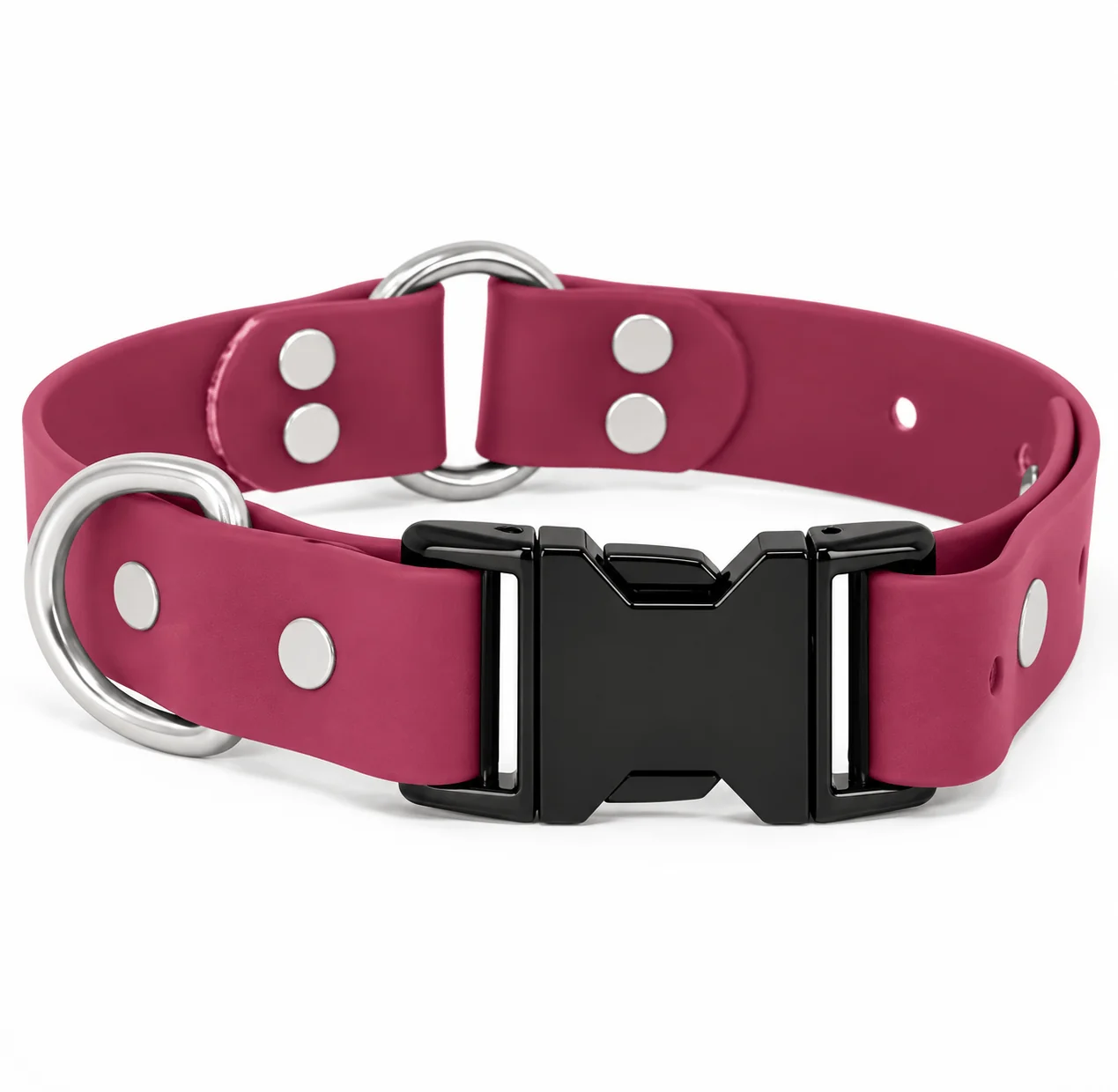
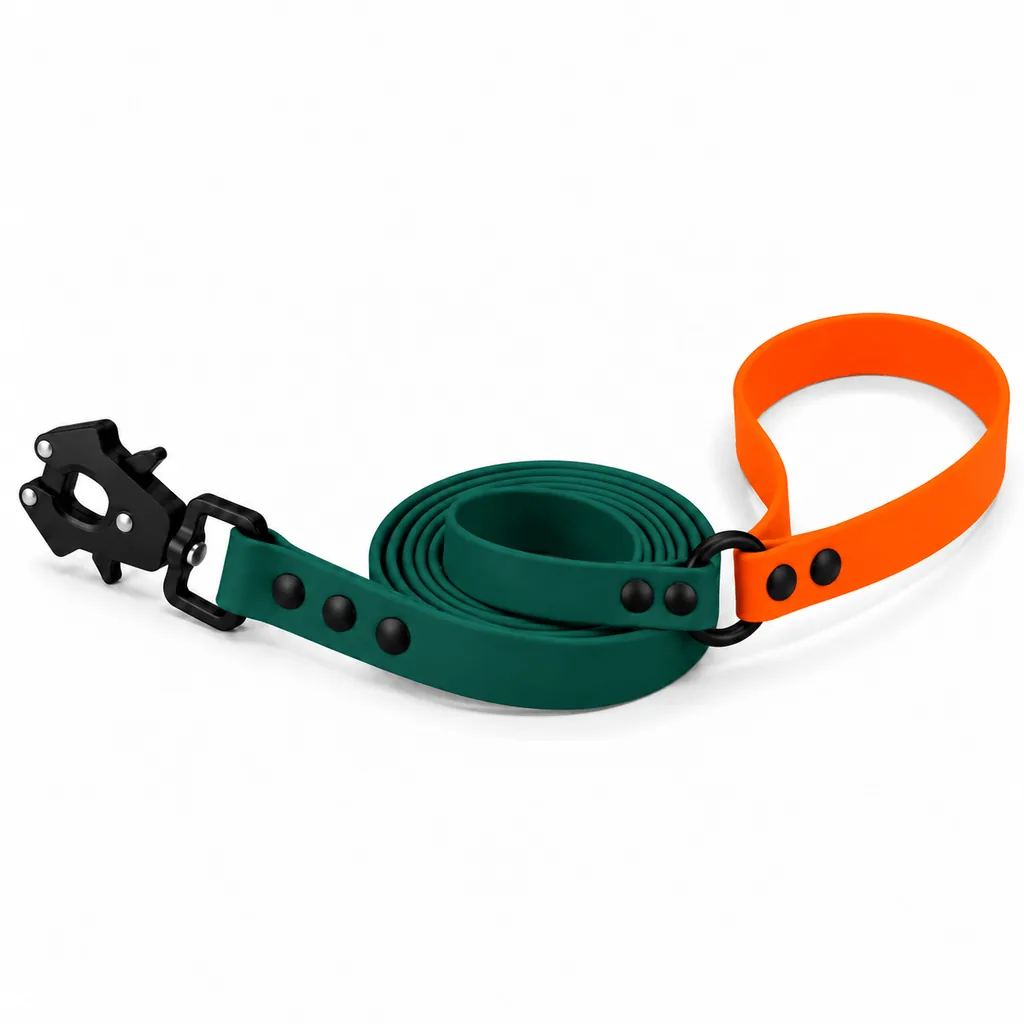
Heavy-Duty Collars and Leashes for Great Danes
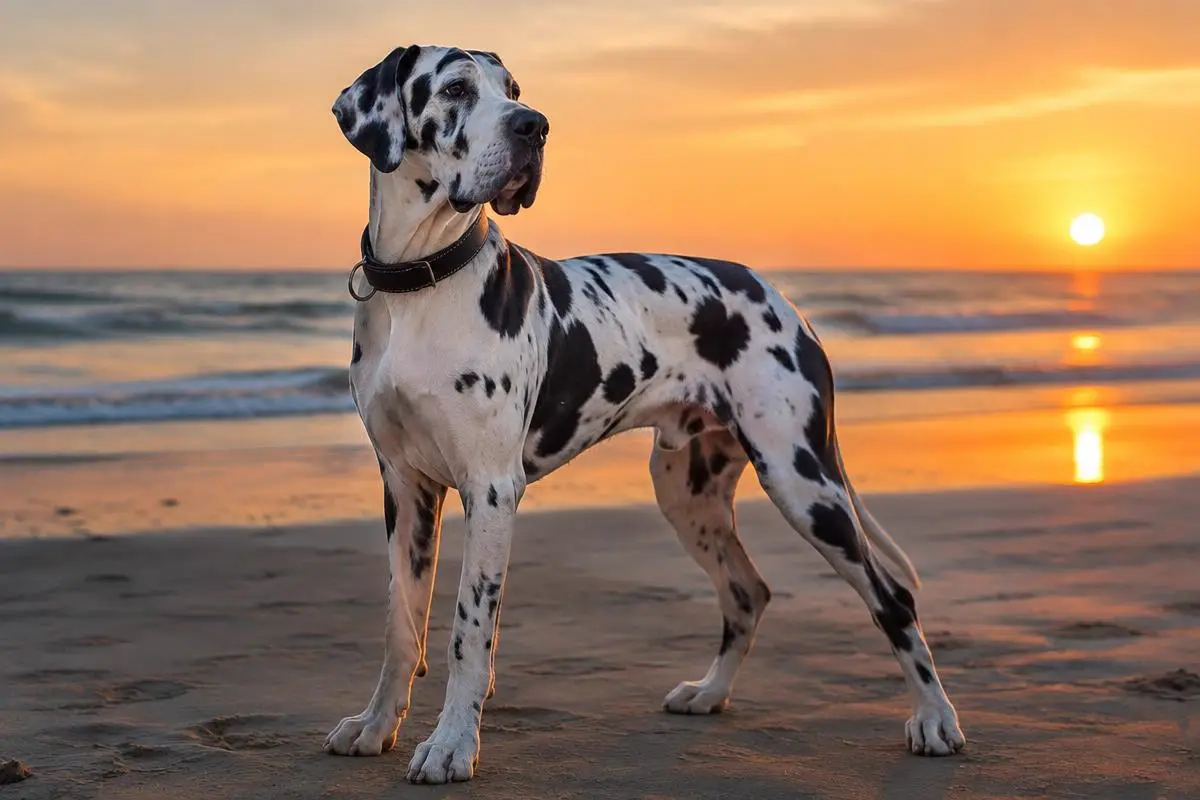
The Great Dane is the tallest breed in the world, the 'Apollo of dogs'. Despite the name, the breed was developed in Germany, where it was used to hunt wild boar and guard noble estates. Today Danes are beloved as elegant, affectionate and surprisingly gentle family dogs. The record for the tallest dog ever belongs to a Great Dane named Zeus, who stood 44 inches at the shoulder.
A Great Dane's long legs and long neck give it incredible leverage. When a 150 pound Dane decides to chase a rabbit, it does not just pull; it launches. That is why Dane owners go through ordinary collars and leashes so quickly.
- Weight
- 110–175 lb
- Height
- 28–32+ in
- Typical neck
- 20–28 in
- Lifespan
- 7–10 years
- Origin
- Germany
- Group
- Working
Why Great Danes need sturdy dog collars and leashes
Height plus weight equals leverage. A Great Dane can stand with its head well above your waist, which means it can pull from an angle that puts enormous strain on the leash clip, the collar ring and the stitching. Gear rated for 'large dogs' of 60 or 70 pounds is not designed for those forces.
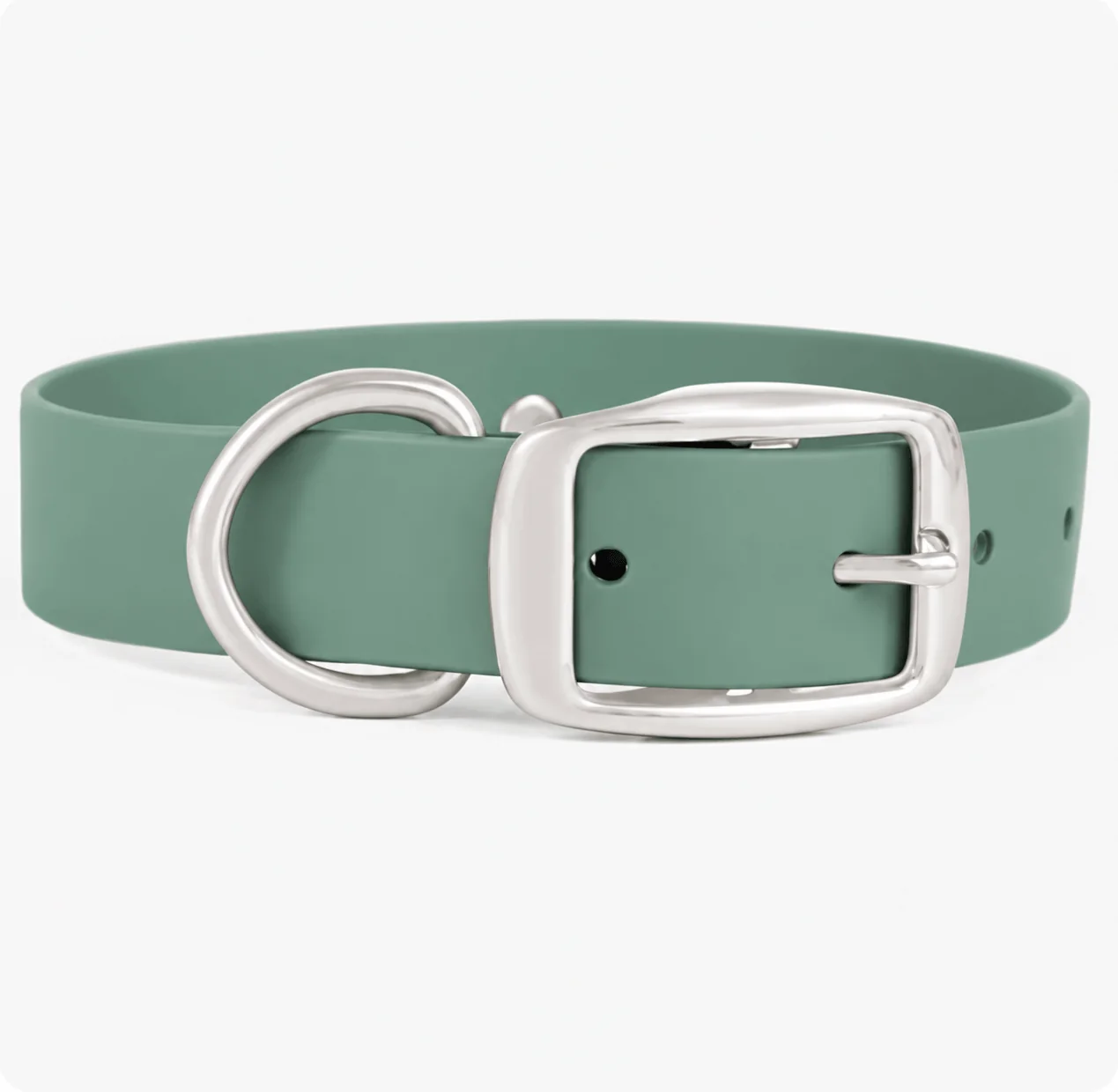
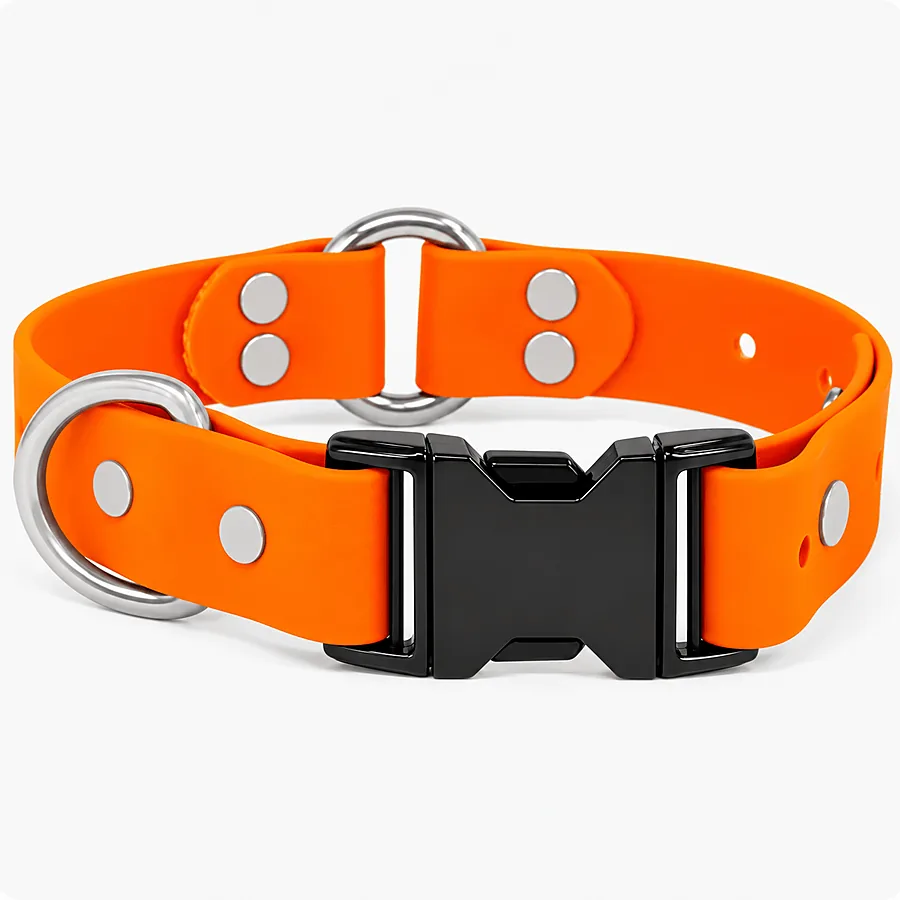
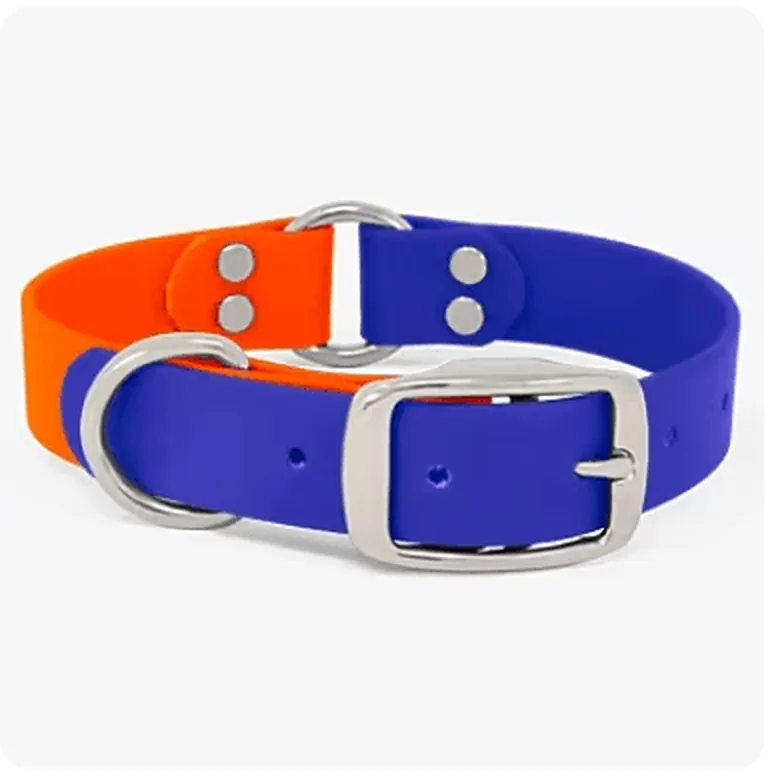
Danes also have long, slender necks relative to their body size. A wide collar distributes pressure along more of the neck and helps protect the trachea and the delicate structures of the throat. Military grade webbing and Chicago style tacks keep the collar from stretching or separating even under repeated lunges.
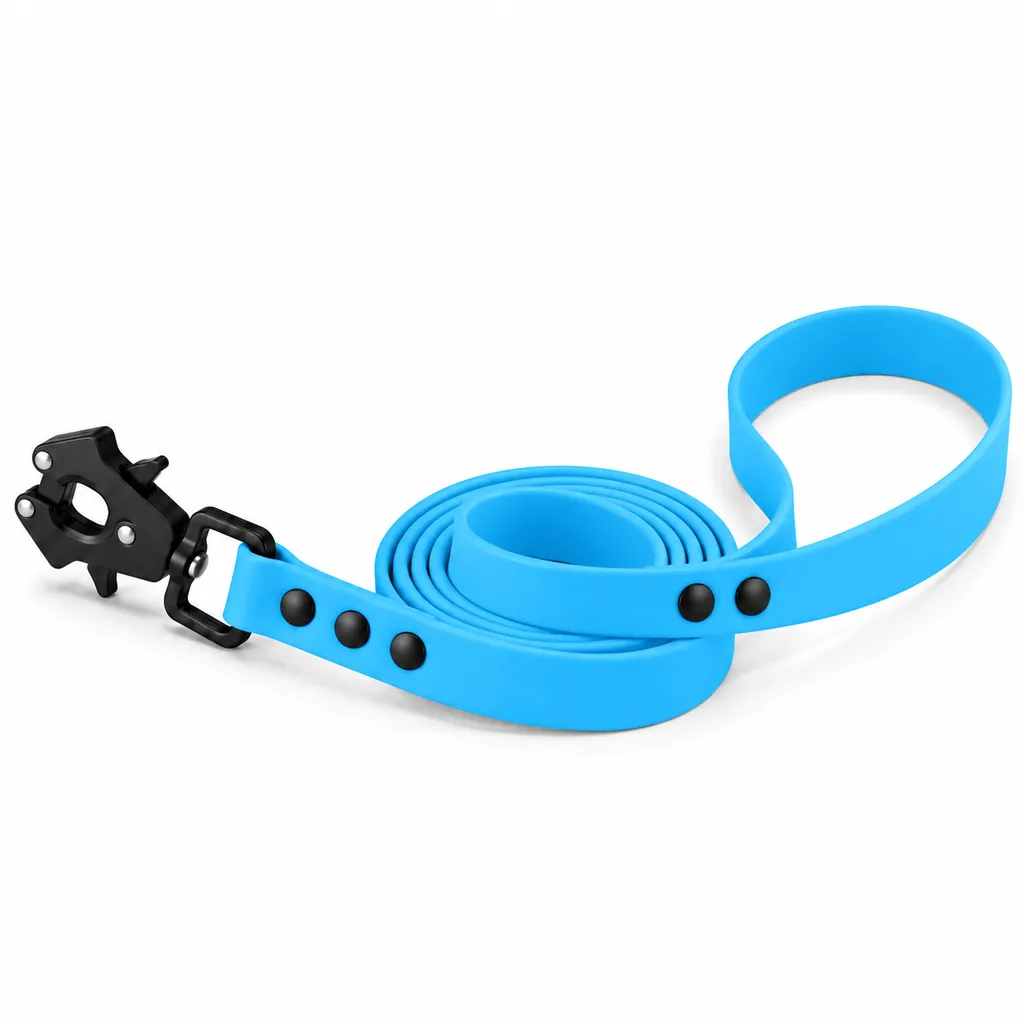
Finally, Great Danes are sighthound-quick. A Dane that slips its collar can cover a block in seconds. Solid hardware and a leash rated for a 1,000 lb break strength are your best insurance.
Great Dane collar sizing
Most adult Great Danes wear a 20 to 28 inch collar. Despite their height, many Danes have leaner necks than mastiffs, so always measure. A Dane puppy can grow from 15 pounds at eight weeks to more than 100 pounds by its first birthday, so check fit every two to three weeks.
To measure for a dog collar for Great Dane, wrap a soft tape measure around the middle of the neck where the collar naturally sits, then slide two fingers under the tape. That number is your neck size. Giant breeds carry thick fur, loose skin and heavy muscle around the throat, so always measure rather than guessing from weight. If your dog falls between two sizes, choose the larger one; every Colossal collar adjusts down so you can dial in a snug, comfortable fit. Re-measure puppies every two to three weeks, because a giant puppy can add an inch of neck in less than a month.
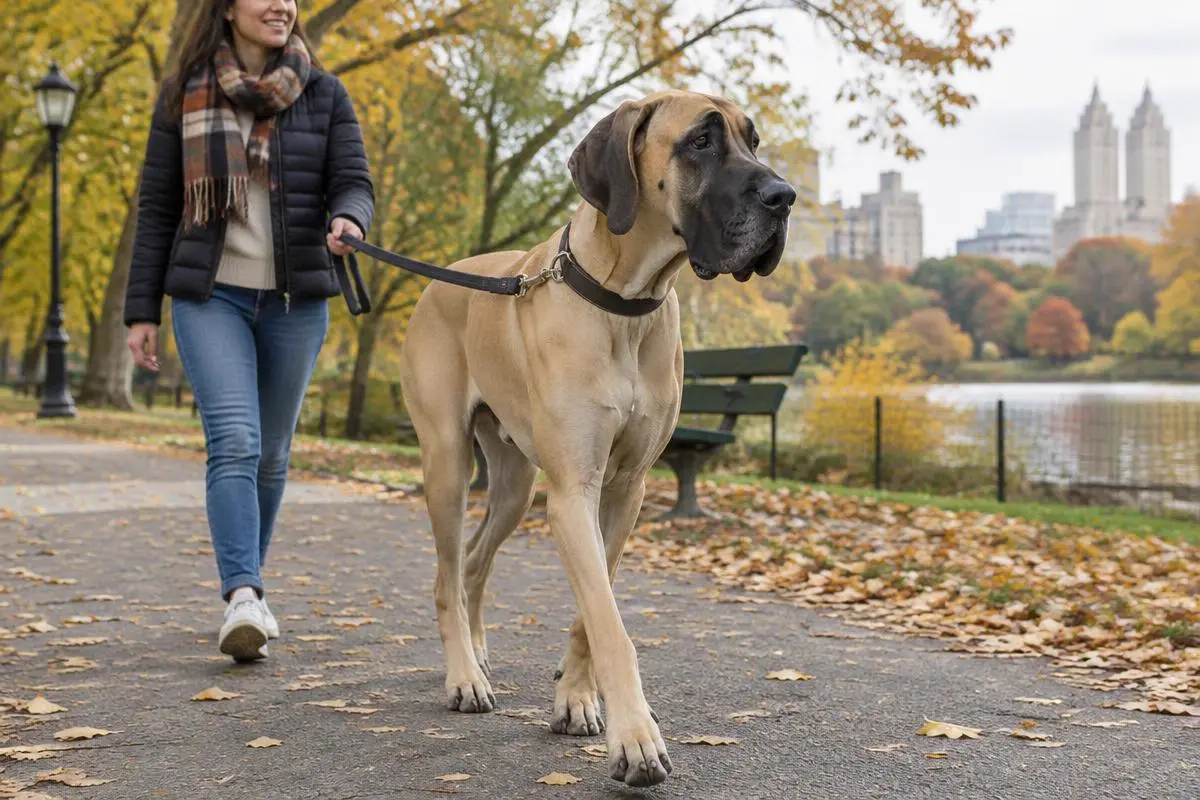
6 ft or 10 ft leash for your Great Dane?
Choosing between a 6 ft and a 10 ft leash comes down to where you walk. A 6 ft leash keeps a giant dog close at your side on sidewalks, in parking lots, at the vet and anywhere traffic or other dogs are nearby, which is where control matters most. A 10 ft leash gives your dog room to sniff, explore and practice recall in parks, on trails and in open fields while still keeping a secure connection. Many giant breed owners keep both by the door. Whichever length you choose, hold the handle with your hand through the loop and a second hand lower on the leash, so a sudden lunge pulls against your body instead of your wrist.
Great Dane health
Bloat is the leading killer of Great Danes, and the breed has the highest risk of any dog. Feed multiple small meals, avoid exercise around mealtimes and talk to your veterinarian about a preventive gastropexy, which can be done at the time of spay or neuter.
Dilated cardiomyopathy, hip dysplasia, wobbler syndrome and bone cancer are also concerns. Grow puppies slowly on a large-breed diet, avoid excessive jumping, and screen hearts as your Dane ages.
Training your Great Dane
Great Danes are people-pleasers who respond well to positive training. Their size makes manners essential; a Dane can put its paws on an adult's shoulders. Teach loose-leash walking, no jumping and a reliable 'leave it' while your puppy is still manageable.
Exercise needs
Adult Danes need 30 to 60 minutes of daily exercise, such as brisk walks and free play in a fenced area. Puppies should not go on long runs; let them play and walk at their own pace until 18 to 24 months.
Grooming and care
The short coat needs only a weekly brush. Danes shed moderately. Trim nails often, since long nails on a heavy dog can cause foot problems, and clean ears regularly. Some Danes drool, especially those with looser lips.
Fun facts about the Great Dane
- Scooby-Doo, the most famous cartoon dog, is a Great Dane.
- Zeus, a Great Dane from Michigan, holds the record as the tallest dog ever at 44 inches.
- The Great Dane is the state dog of Pennsylvania.
- Danes come in many colors, including fawn, brindle, blue, black, harlequin and mantle.
Caring for your Great Dane's collar and leash
Good gear lasts longer with a little care. Check your dog's collar and leash every few weeks for frayed edges, loose stitching or worn hardware, and look at the skin under the collar for redness or rubbing. Hand wash webbing in warm, soapy water, rinse well and let it air dry; avoid harsh bleach that can weaken fibers. Take the collar off during unsupervised crate time and rough play with other dogs to prevent snags. A properly fitted collar should be snug enough that it cannot slip over the head but loose enough to fit two fingers underneath.
Built for giants like yours
Every Colossal Canine Co. collar and leash is handmade to order in the USA from military grade webbing, heavy-gauge stainless steel or black hardware and Chicago style tacks placed where the load lands. Our leashes are rated for a 1,000 lb break strength, and everything we build is backed by a lifetime guarantee. Shipping is free on orders over $75 and a flat $7.95 below that, across the continental 48 states.
Great Dane gear FAQ
What collar size does a Great Dane need?
Most adults need 20 to 28 inches. Measure mid-neck and add two fingers of room.
How fast do Great Dane puppies grow?
Very fast. Many gain 100 pounds in their first year, so check collar fit every two to three weeks.
Is a 6 ft leash long enough for a Great Dane?
Yes. A 6 ft leash gives good control on walks; choose 10 ft for training and open spaces.