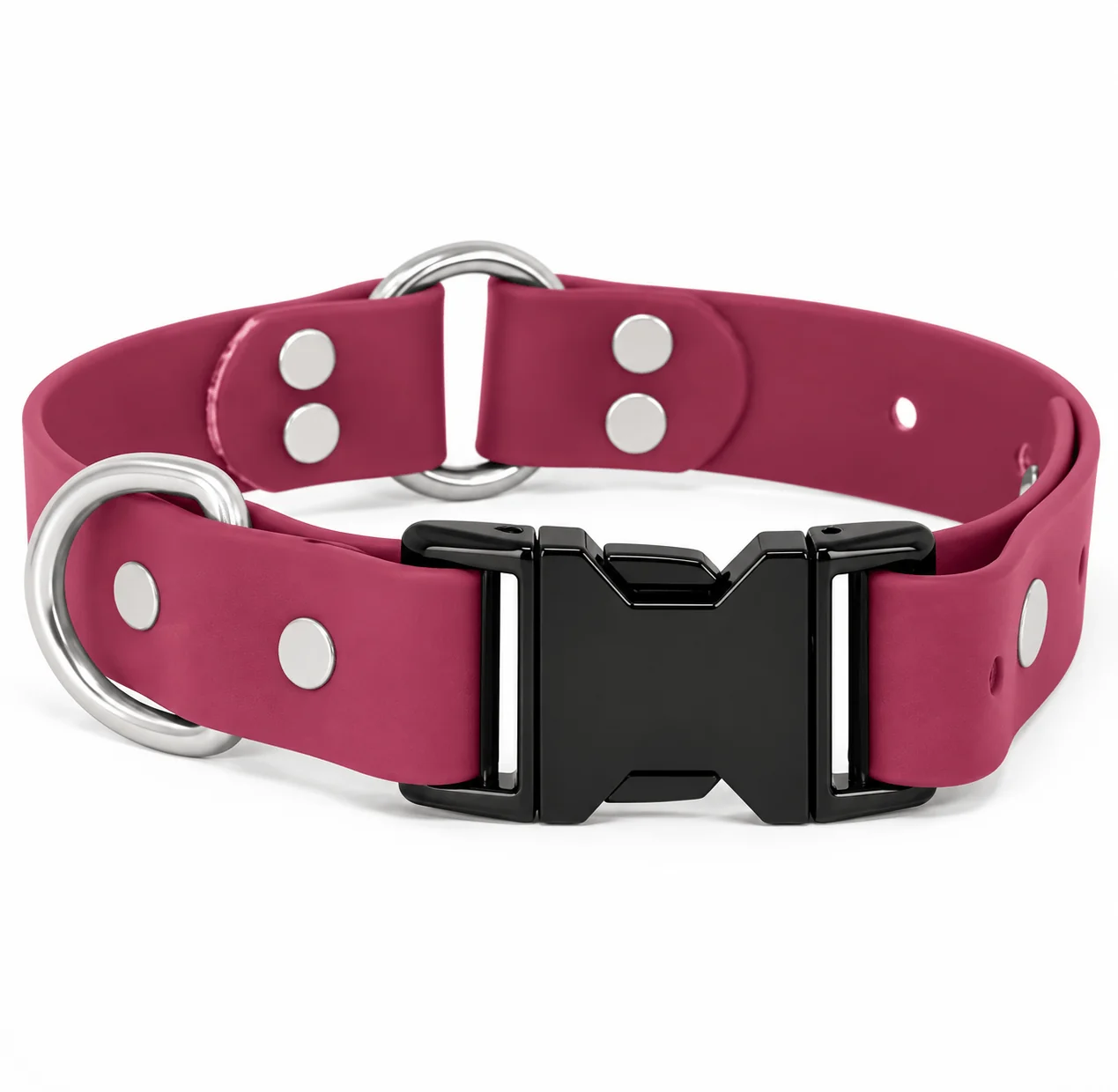
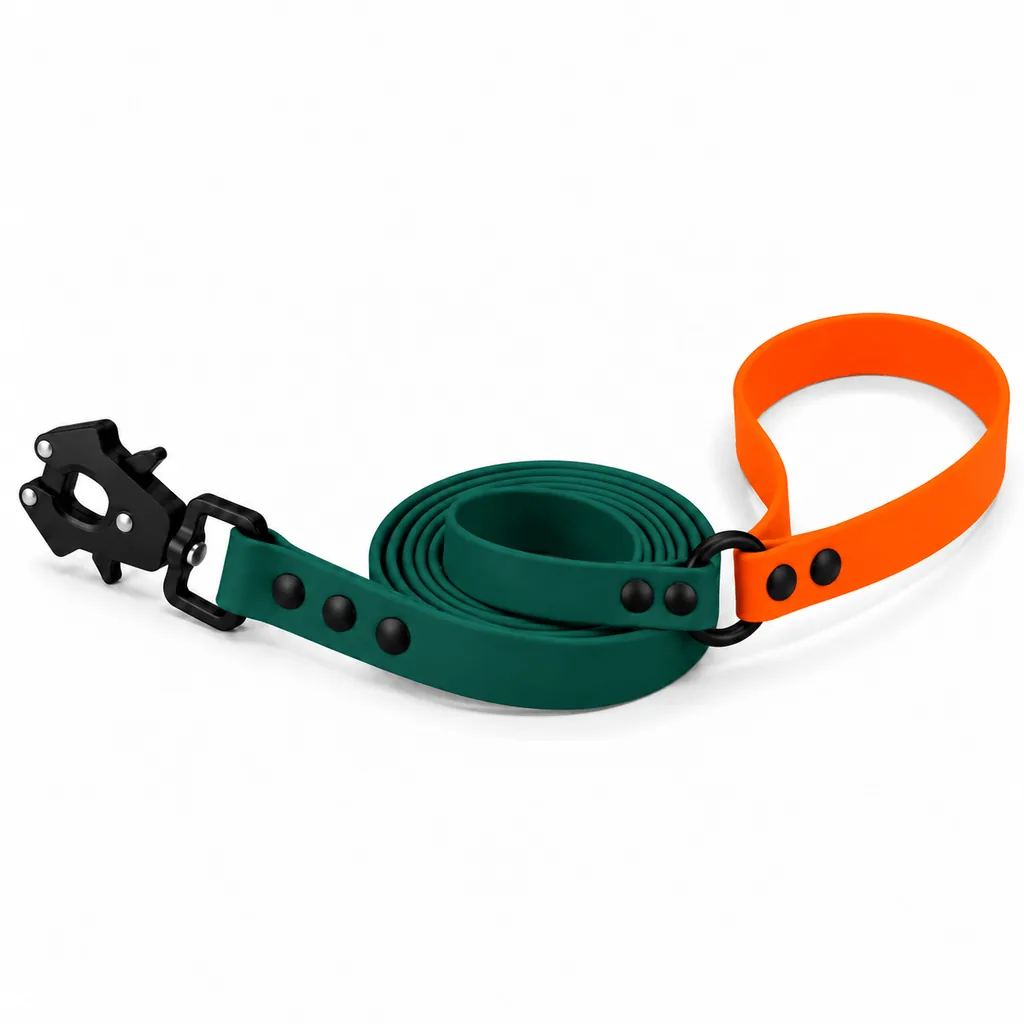
XXL Collars and Leashes for Saint Bernards
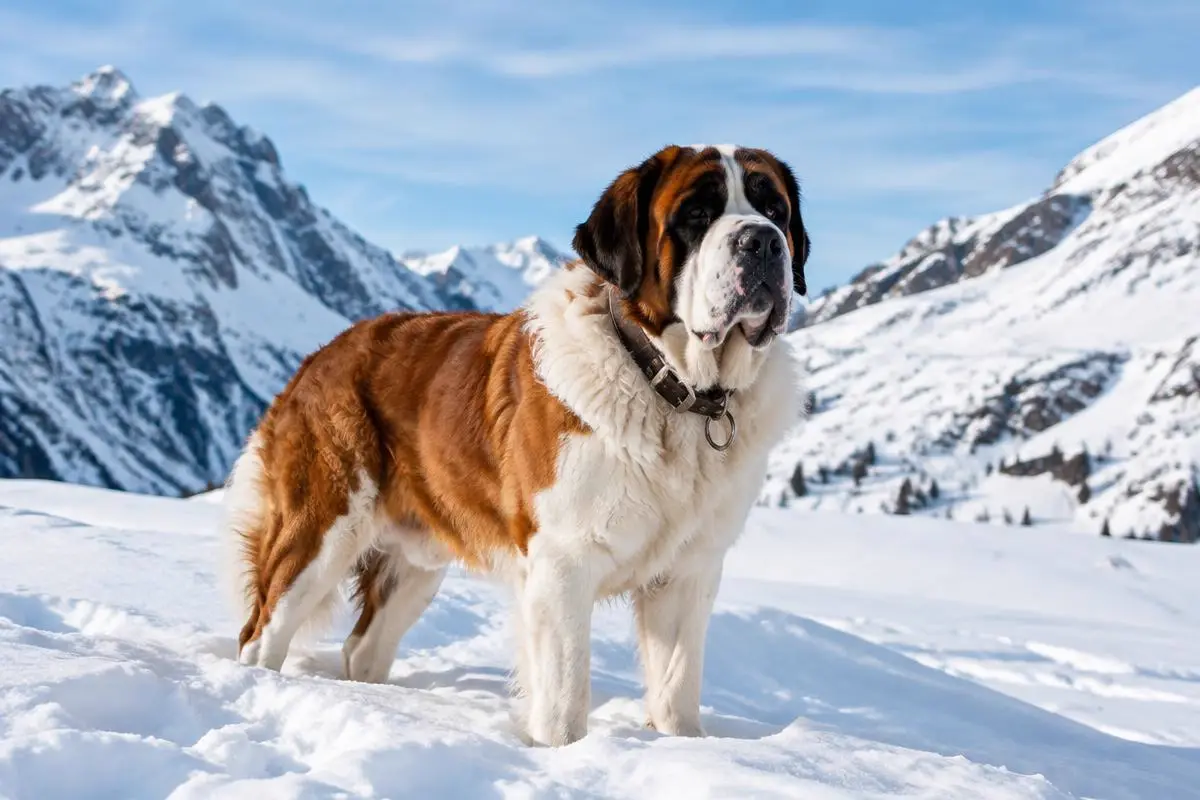
The Saint Bernard is named after the Great St Bernard Hospice, a refuge for travelers on a treacherous Alpine pass between Switzerland and Italy. Starting in the early 1700s, monks bred these dogs to find and rescue travelers lost in snowstorms and avalanches. The most famous, Barry, is credited with saving more than 40 lives.
Today's Saint Bernard is a gentle, patient and friendly family dog, but it is also enormous, often weighing 140 to 180 pounds, with a huge head and a thick, muscular neck. Gear that works for a Labrador simply is not built for a Saint.
- Weight
- 120–180 lb
- Height
- 26–30 in
- Typical neck
- 24–32 in
- Lifespan
- 8–10 years
- Origin
- Switzerland
- Group
- Working
Why Saint Bernards need sturdy dog collars and leashes
Saint Bernards were bred to push through deep snow and haul loads, and that strength is still there. A Saint that wants to greet another dog or head home can easily overpower its owner and the average collar. Heavy-gauge hardware and reinforced stitching are the only reliable answer.
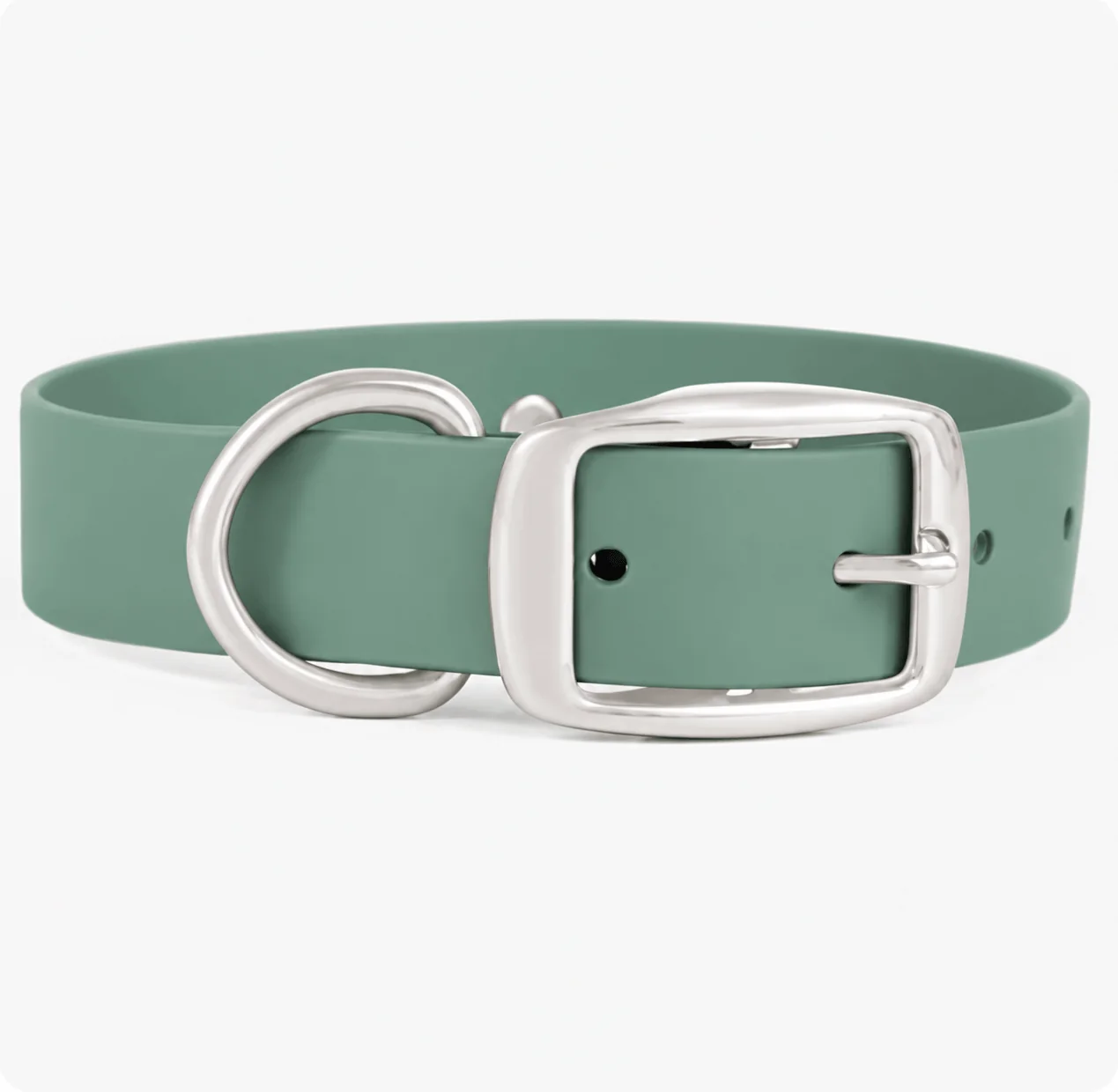
Saints have some of the thickest necks in the dog world, often 28 inches or more, and most store-bought collars do not fit. A collar that barely closes puts constant stress on the buckle and holes. Colossal collars go up to 32 inches so your Saint wears the collar with room to adjust.
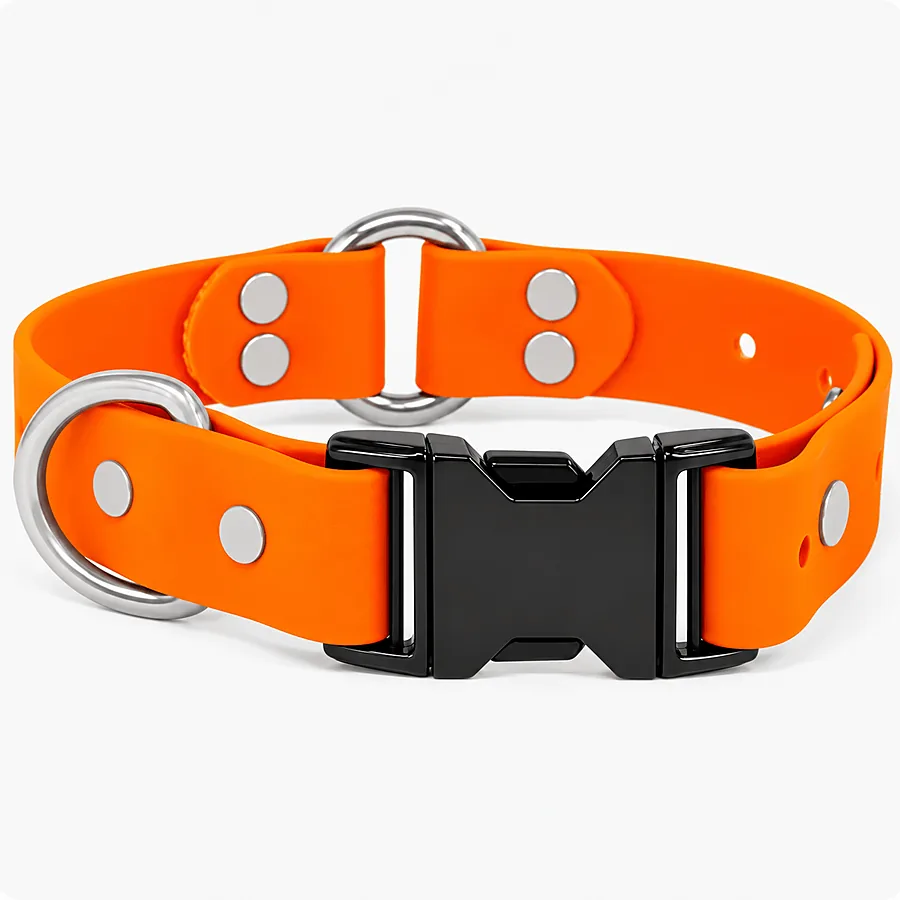
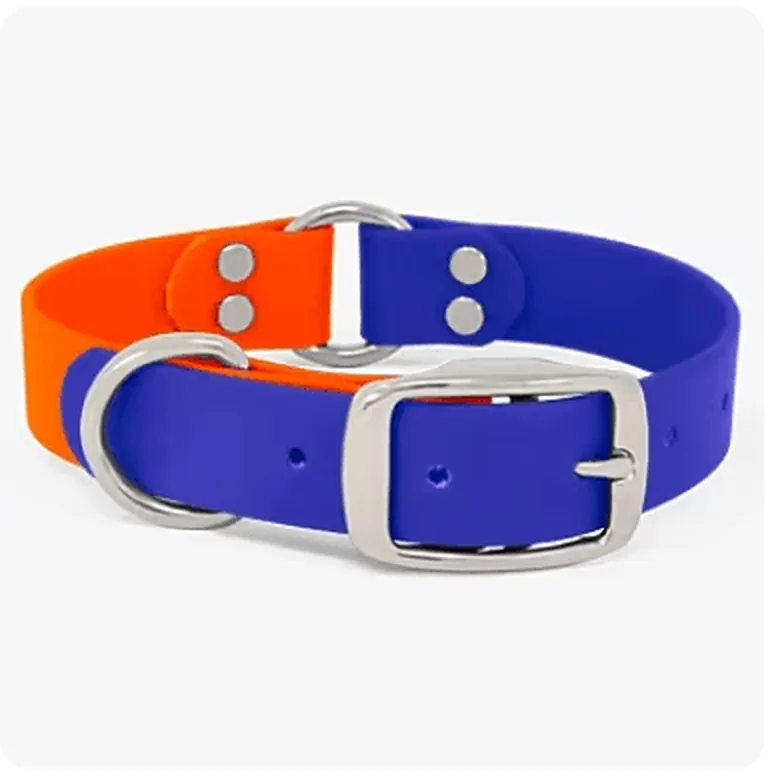
Saints drool heavily and love snow, so collars get wet constantly. Military grade webbing and stainless steel hardware hold up to moisture and frequent washing far better than leather.
Saint Bernard collar sizing
Most adult Saint Bernards wear a 24 to 32 inch collar. Part the coat if your Saint is long-haired, measure mid-neck against the skin, and add two fingers. Choose a 6 ft leash for control on everyday walks.
To measure for a dog collar for Saint Bernard, wrap a soft tape measure around the middle of the neck where the collar naturally sits, then slide two fingers under the tape. That number is your neck size. Giant breeds carry thick fur, loose skin and heavy muscle around the throat, so always measure rather than guessing from weight. If your dog falls between two sizes, choose the larger one; every Colossal collar adjusts down so you can dial in a snug, comfortable fit. Re-measure puppies every two to three weeks, because a giant puppy can add an inch of neck in less than a month.
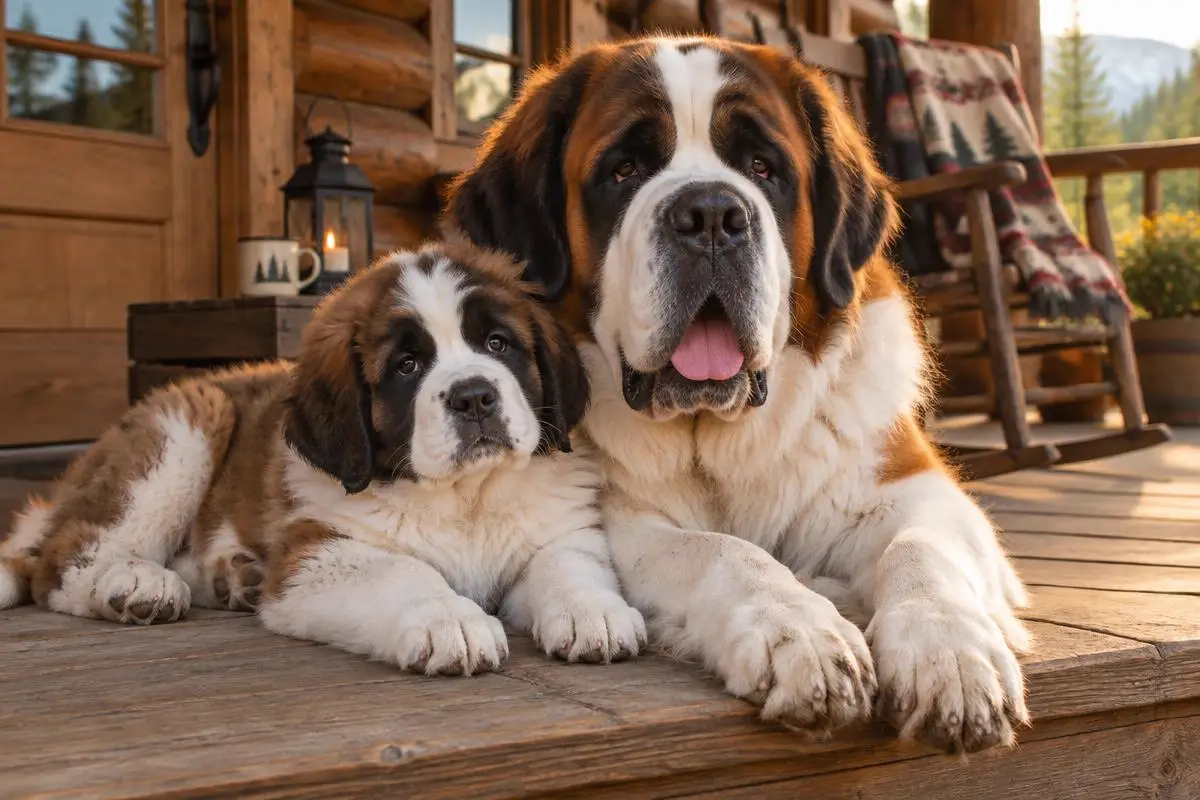
6 ft or 10 ft leash for your Saint Bernard?
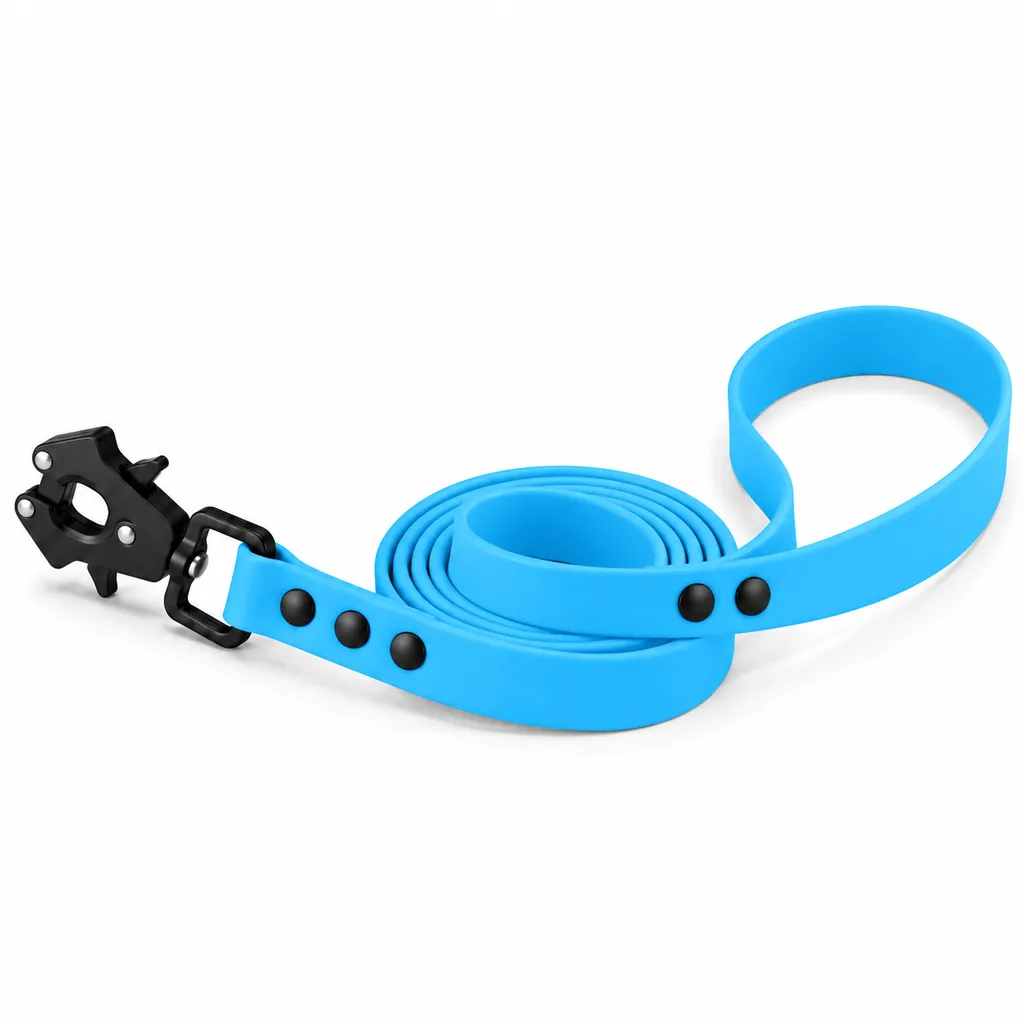
Choosing between a 6 ft and a 10 ft leash comes down to where you walk. A 6 ft leash keeps a giant dog close at your side on sidewalks, in parking lots, at the vet and anywhere traffic or other dogs are nearby, which is where control matters most. A 10 ft leash gives your dog room to sniff, explore and practice recall in parks, on trails and in open fields while still keeping a secure connection. Many giant breed owners keep both by the door. Whichever length you choose, hold the handle with your hand through the loop and a second hand lower on the leash, so a sudden lunge pulls against your body instead of your wrist.
Saint Bernard health
Saint Bernards are prone to hip and elbow dysplasia, bloat, dilated cardiomyopathy, osteosarcoma and eyelid problems such as entropion and ectropion. Keep your Saint lean, feed multiple small meals, and schedule regular heart and eye checks.
Saints are cold-weather dogs that overheat easily. In warm weather, walk early or late, provide shade and cool water, and watch for heavy panting.
Training your Saint Bernard
Saints are intelligent and eager to please but can be stubborn. Start obedience and leash training early, while your puppy still weighs less than you do. Calm greetings and no jumping are essential for a dog that can knock over an adult.
Exercise needs
Adults need moderate daily exercise of 30 to 60 minutes. Saints enjoy walks, hikes in cool weather and pulling carts. Puppies should avoid stairs, jumping and long walks until about 18 months.
Grooming and care
Saints come in short-haired and long-haired varieties, and both shed heavily. Brush several times a week, clean the eyes and face daily, and keep drool towels everywhere. Wash collars often.
Fun facts about the Saint Bernard
- Barry, the most famous Saint Bernard, rescued more than 40 people and is preserved in the Natural History Museum in Bern.
- The classic barrel around the neck is a myth popularized by an 1820 painting.
- Beethoven, the movie dog, is a Saint Bernard.
- Saint Bernards were once called 'Barry dogs' in honor of the famous rescuer.
Caring for your Saint Bernard's collar and leash
Good gear lasts longer with a little care. Check your dog's collar and leash every few weeks for frayed edges, loose stitching or worn hardware, and look at the skin under the collar for redness or rubbing. Hand wash webbing in warm, soapy water, rinse well and let it air dry; avoid harsh bleach that can weaken fibers. Take the collar off during unsupervised crate time and rough play with other dogs to prevent snags. A properly fitted collar should be snug enough that it cannot slip over the head but loose enough to fit two fingers underneath.
Built for giants like yours
Every Colossal Canine Co. collar and leash is handmade to order in the USA from military grade webbing, heavy-gauge stainless steel or black hardware and Chicago style tacks placed where the load lands. Our leashes are rated for a 1,000 lb break strength, and everything we build is backed by a lifetime guarantee. Shipping is free on orders over $75 and a flat $7.95 below that, across the continental 48 states.
Saint Bernard gear FAQ
What collar size does a Saint Bernard need?
Most adults need 24 to 32 inches. Measure mid-neck against the skin and add two fingers.
Why do Saint Bernards need XXL collars?
Their necks are among the thickest of any breed, and standard collars rarely fit or hold up.
Are Saint Bernards good with kids?
Yes. Saints are known for their patience, but their size means supervision with small children is wise.