how-to · November 7, 2026
How to Stop Dog Pulling on Leash: A Step-by-Step Plan
8 min read · Editorial Team
Last Updated: November 6, 2026
Quick Summary
To stop dog pulling, stop rewarding it: stop walking whenever the leash goes tight, wait for slack, then reward your dog and move forward again. Practice in short daily sessions, starting indoors and progressing to busier outdoor spaces as your dog improves.
- Stop walking the moment the leash goes tight, and wait for slack before moving again.
- Keep training sessions to five minutes, two or three times a day, starting indoors with no distractions.
- Use a U-turn when your dog keeps pulling ahead, rewarding it for following you.
- Fit the collar or harness snugly so it cannot slip over the head, and use gear rated for strength.
- Never use a leash to yank a large dog back, because sudden force can injure the neck and throat.
Table of Contents
- Why Your Dog Pulls and What to Do Before the Walk
- Loose Leash Walking Training, Step by Step
- How to Stop Leash Pulling in 5 Minutes Each Day
- When Dog Pulling on Leash Persists Despite Training
- Frequently Asked Questions
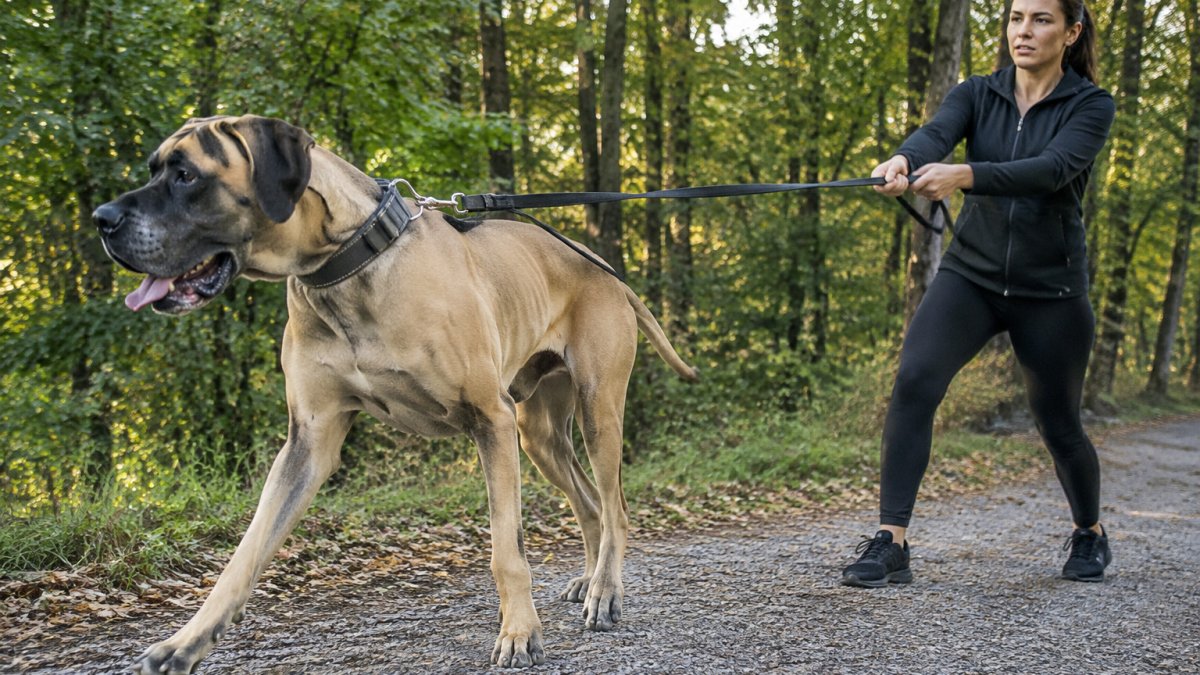
Dog pulling on the leash is the most common walking problem owners of giant breeds face, and a strong dog can turn a short walk into a shoulder-wrenching ordeal. Learning how to stop dog pulling takes consistent practice, not a single fix. This plan covers gear and daily training.
Why Your Dog Pulls and What to Do Before the Walk
Dogs pull because pulling works: forward movement gets them to the smell, squirrel, or grass faster. Your first job in learning how to stop dog pulling is to stop rewarding it.
Before every walk, check the basics:
- Fit the collar or harness snugly so it cannot slip over the head.
- Use gear rated for strength. A worn clip can fail under a lunge.
- Burn off extra energy with a short play session.
- Start in a quiet spot like a driveway or backyard.
Watch out: never use a leash to yank a large dog back. Sudden force can injure the neck and throat.
Loose Leash Walking Training, Step by Step
Loose leash walking means your dog walks beside you with slack in the lead. Dogs learn this fastest when training is staged by skill level rather than practiced only on real walks. Advance only when your dog keeps the leash slack for most of the session.
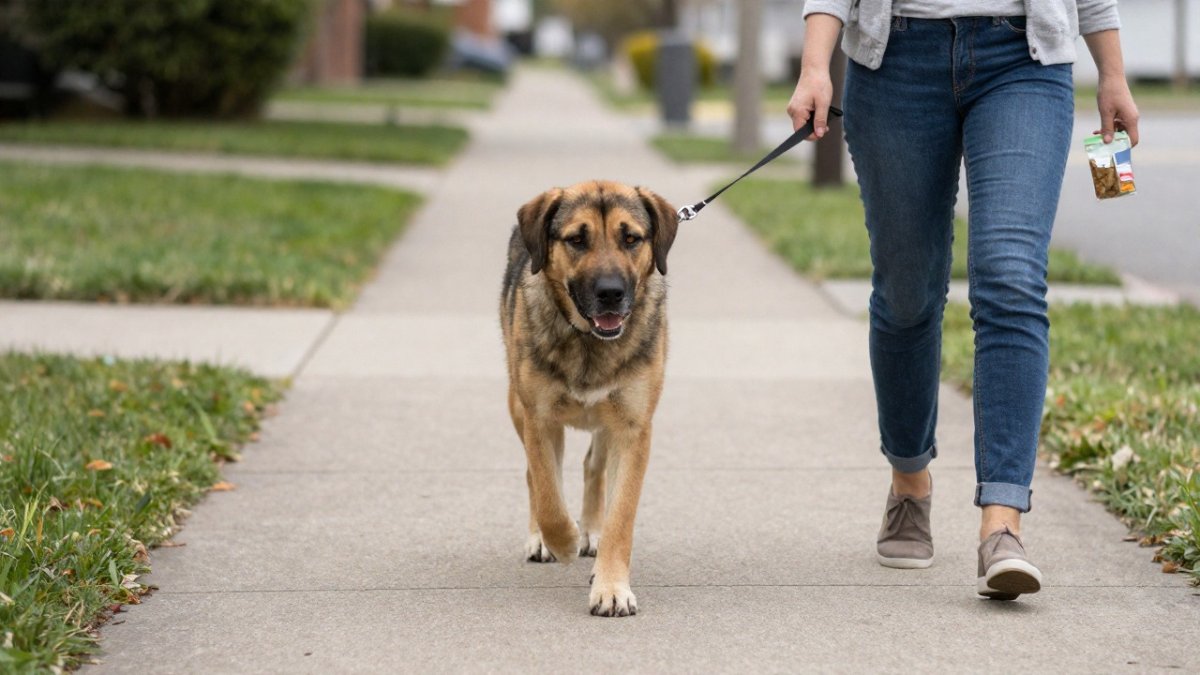
Stage 1: Indoor and yard foundation (no distractions). Hold a treat in the hand closest to your dog's nose, take one step forward, and reward your dog each time it stays by your side. Stop the moment the leash goes tight, wait for slack, then praise and reward before moving again. Keep sessions to five minutes, two or three times a day.
Stage 2: Low-distraction outdoor spaces. Move to a driveway, quiet sidewalk, or park corner with few dogs, people, or scents. A six-foot game day leash rated for giant breeds gives you the length and hardware to practice with a strong dog. Repeat the stop-and-wait and reward loop. Add a U-turn when your dog keeps pulling ahead: turn away calmly, reward your dog for following, and resume forward walking only when the leash is slack.
Stage 3: Real-world walks with controlled challenges. Gradually introduce busier streets, pedestrians, and mild scent distractions. Before each walk, do a one-minute warm-up in the yard with loose-leash practice and stop-and-wait drills. Reward calm walking every few steps at first, then thin the rewards as your dog improves. If pulling spikes, shorten the route, increase distance from the trigger, or return to Stage 2 for a session.
Stage 4: Generalization and maintenance. Practice in new locations and at different times of day so slack-leash walking applies everywhere. End on a good note even if that means cutting a walk short. If you keep walking while the leash is tight, you are rewarding the pulling, so stop and wait for slack every time.
For dogs that pull from excitement, fear, or scenting, adapt the plan by cause. An excited puller often needs a short play session before the walk and more frequent rewards for checking in. A fearful puller may need greater distance from triggers and slower exposure. A scent-driven puller benefits from designated sniff breaks on a long line, followed by structured loose-leash walking. Puppies, rescue dogs, or adult dogs new to leash training follow the same progression but need more time at each stage.
How to Stop Leash Pulling in 5 Minutes Each Day
Short, daily sessions work better than one long weekend session when you want to stop dog pulling. Use this simple routine:
| Step | Time | How Often |
|---|---|---|
| Warm-up in the yard | 1 minute | Every session |
| Loose leash practice | 2 minutes | Once or twice daily |
| Stop and wait drills | 1 minute | Every session |
| Reward calm walking | 1 minute | Every session |
Time
Keep walks short and successful. A short walk that ends on a good note builds more progress than a long one full of tugging.
When Dog Pulling on Leash Persists Despite Training
If your dog still pulls after several weeks of consistent practice, the problem is usually one of four things: the training environment is too hard, the rewards are not valuable enough, the equipment is fighting you, or the pulling has a specific cause you have not addressed. For a heavy dog, compare leash styles and lengths that give real control before changing anything else.
Troubleshoot by cause and context. Excitement pulling often appears at the start of a walk or when another dog is visible; try a short play session before leaving, reward check-ins more often, and increase distance from other dogs. Fear-based pulling shows up as backing away, freezing, or lunging near triggers; reduce exposure, add distance, and pair triggers with treats at a tolerable level. Scent-driven pulling happens when the nose takes over; allow structured sniff breaks on a long line, then ask for loose-leash walking again. Rotate locations and times so the behavior generalizes.
Check equipment fit and safety. A harness should sit snugly without restricting shoulder movement, with room for two fingers under any strap. Check that it cannot slip over the head when your dog backs up, and inspect clips and buckles for wear before every walk. Since a strong dog puts the most stress on the buckle, see how heavy-duty quick-release hardware handles hard lunges. Avoid equipment that tightens around the neck or applies throat pressure; these can cause injury and often increase pulling. If you use a long line for sniff breaks, attach it to a harness rather than a collar and avoid areas near traffic.
Measure progress and set realistic expectations. Define observable milestones: leash stays slack for 10 consecutive steps, dog checks in when a distraction appears, dog recovers from a tight leash within a few seconds. Track these in a simple note after each walk. Loose-leash walking takes weeks to months depending on the dog's age, breed, and history, not days. If your dog is not improving after several weeks of consistent short sessions, simplify the environment and increase reward frequency rather than repeating the same failing setup.
Know when to seek professional help. If your dog shows severe reactivity, fear, or aggression on walks, or if you are at risk of being pulled into traffic or falling, consult a certified reward-based trainer or veterinary behaviorist.
Frequently Asked Questions
How do I stop my dog from pulling extremely hard on the leash?
Stop walking the moment the leash goes tight, and stand still until the leash slackens. Only move forward when the dog looks back or eases the pressure, then reward that calm moment right away. Pulling works for the dog when forward movement follows it, so the goal is to make tension pointless. Keep the first sessions short, in quiet areas, and practice inside or in the yard before you try busy streets. Consistency across every walk matters more than any single session.
How long does it take to train a dog not to pull?
Most dogs show clear improvement within a few weeks of daily short sessions, but lasting loose-leash manners often take several months. Progress depends on age, history, and how distracting the environment is. Puppies and rescue dogs may learn quickly yet relapse under excitement, while adult dogs with strong habits need more repetition. Track progress by how often you have to stop, not by how far you walk, and expect setbacks in new places.
Do dogs grow out of leash pulling?
Dogs rarely grow out of leash pulling on their own. Pulling tends to get stronger as a dog gets bigger and more confident, which is a real concern with giant breeds over 100 pounds. Young giant breed puppies can be easier to redirect early, so starting training while they are small pays off. Adjustable, high-strength equipment helps you keep control as your dog grows.
