listicle · November 11, 2026
5 Strong Leashes for a 100 Pound Dog Tested for Pull
10 min read · Editorial Team
Quick Summary
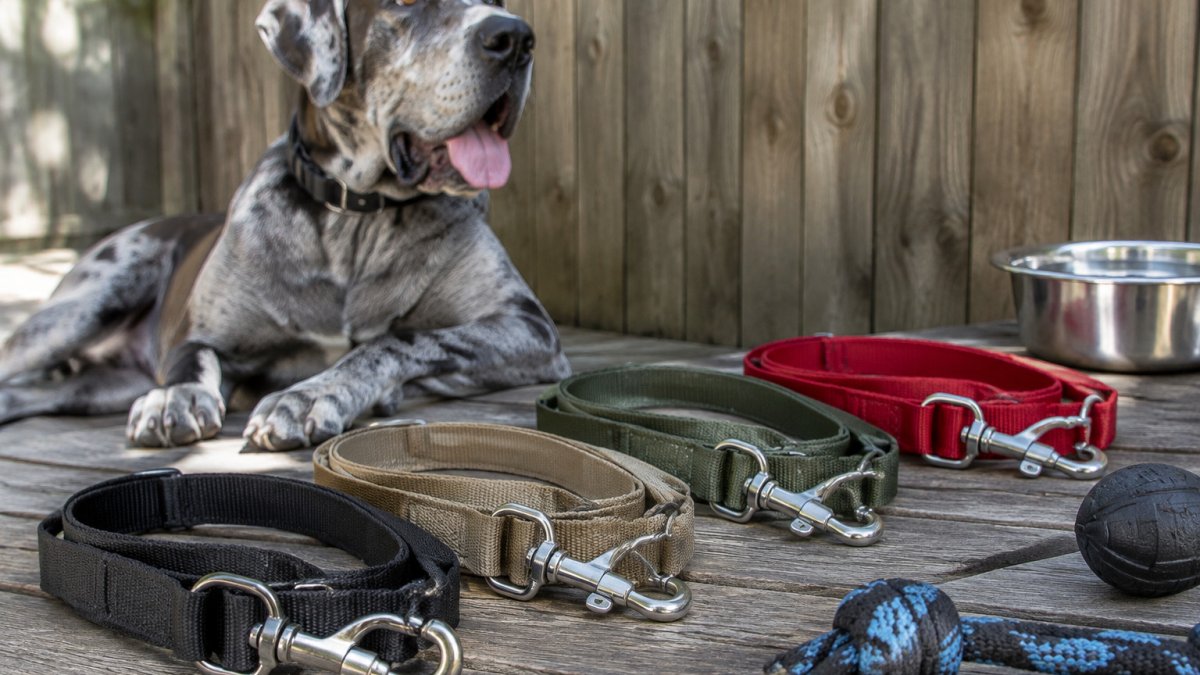
A strong leash for a 100 pound dog needs rated hardware, sturdy webbing, and a width and handle that suit your grip. Clips and swivels usually fail before the webbing, so check the hardware first. The Colossal Canine Co. 10ft leash is built for dogs over 100 lb.
- Check clips and swivels first, since they often fail before the webbing does.
- Look for a solid metal bolt snap or a locking carabiner-style gate.
- A broad-chested dog that pulls hard may suit a strap about 1 to 1 1/2 inches wide.
- Choose a handle loop long enough to wrap once around your wrist as a backup grip.
- Inspect your leash every few weeks and replace it at the first sign of significant wear.
Table of Contents
- How We Picked These Strong Leashes for a 100 Pound Dog
- Strong Leash Options Compared: Table and Verdicts
- Rope vs. Nylon Dog Leash: Which Holds Up Under Pulling
- Heavy Duty Leash for Large Dogs: Strength Ratings, Hardware and Fit
- Matching Your Strong Dog Leash for Pulling to Your Dog and Your Grip
- Inspecting, Replacing and Choosing Your Next Leash
- Frequently Asked Questions
How We Picked These Strong Leashes for a 100 Pound Dog
Last Updated: November 10, 2026
A 100-pound dog can generate enough force to snap a cheap leash clip in one lunge. Colossal Canine Co. builds gear for dogs in this size range. Our picks below focus on what actually matters for a dog this strong: webbing strength, hardware security, and fit.
Strength claims deserve scrutiny. A break-strength figure tells you how much load a leash can take before failure, but not how it holds up after months of pulling, weather, and abrasion. A strong webbing tied to a weak clip is still a weak leash.
- Hardware first: clips and swivels usually fail before the webbing does
- Material next: nylon and rope behave differently under sudden load
- Fit last: width and length must suit both the dog and the handler's grip
Strong Leash Options Compared: Table and Verdicts
The table below summarizes the options compared. Colossal Canine Co. pricing depends on the product and order, so check its website for current costs and quotes.
| Leash | Material | Reported Price | Best For |
|---|---|---|---|
| Colossal Canine Co. | Military-grade webbing, stainless hardware | Check website | Dogs over 100 lb |
| Mendota Pet Snap Leash | Durable snap leash | Not shown | Dogs 50 lb and up |
| Ray Allen Adjustable Frog Clip | Nylon | Not shown | Adjustable control |
| Atlas Pet Lifetime Leash | Climbing rope | $90 | Premium rope buyers |
| Ruffwear Leashes | Varied, reflective options | $20 to $39.99 | Budget-minded walkers |
Our verdict: the Colossal Canine Co. 10ft leash suits owners who need length and rated hardware for a dog this size. The 6ft XXL leash is the better everyday option when space is limited.
Rope vs. Nylon Dog Leash: Which Holds Up Under Pulling
Nylon webbing and rope are both common for large dogs, but they behave differently in the conditions that actually wear a leash down. The clearest way to compare them is by how each performs for grip, weather, cleaning, and abrasion, since those are the day-to-day factors that decide whether a leash stays in good shape.
For grip, flat nylon webbing sits comfortably across the palm and tends to hold a steady position in the hand, while a braided or twisted rope can dig in more and feel rougher on bare skin, though many people find the texture more secure when wet or sweaty. A handle with a sewn loop or a padded section improves either material.
For weather, nylon generally handles rain and mud well and dries quickly, but it can absorb water and get heavier. Rope is more variable: natural fibers can rot or stiffen when soaked and dried repeatedly, while synthetic rope resists moisture better. Coated, waterproof webbing offers a useful middle path for owners who walk in wet climates, since the coating sheds water and dirt and usually wipes clean.
For cleaning, nylon webbing can usually be hand-washed in warm water and air-dried, and grit tends to rinse out of flat weave more easily than out of tight rope strands.
For abrasion, rope often holds up well against being dragged over rough ground, while nylon can fray at the edges if it rubs repeatedly on concrete or rocks. Neither material is automatically stronger. The right choice depends on your walking environment and how your dog pulls: a dog that surges unpredictably may benefit from the slight give in nylon, while a steady, heavy puller who tests the same spot repeatedly may do better with a tightly woven rope that holds its shape over time.
Watch out: a leash that looks strong but has worn stitching at the clip point can fail without warning, regardless of material. Check both nylon and rope regularly, especially after walks on rough ground.
Heavy Duty Leash for Large Dogs: Strength Ratings, Hardware and Fit
Strength ratings are the most quoted and least understood number on a leash package, so it helps to separate the terms. Tensile strength is the load at which a material fails when pulled straight in a test, usually measured on a new, unworn sample. Working load is the force a manufacturer considers safe for regular use, and it is normally set well below the failure point. Real-world pulling force is different again: a lunge at a squirrel can briefly spike the load on the leash far above a steady pull, and the sudden jerk matters as much as the peak number. When you compare two leashes, ask which of these figures is being reported, whether the rating applies to the webbing alone or to the assembled leash with clip, and whether the test method is described at all. A figure with no stated method is a marketing claim, not a specification.
Hardware deserves equal attention, because the clip and swivel often fail before the webbing does. Look for a solid metal bolt snap or a locking carabiner-style gate, and check that the swivel turns freely without play, since a seized swivel transfers twisting force to the clip. Stitching at the attachment point is the other weak spot.
Fit depends on the dog's build and behavior, not only on the weight label. A broad-chested dog that pulls hard into the chest benefits from a wider strap, around 1 to 1 1/2 inches, which spreads the load across more of your palm and reduces the chance of rope burn or a slipped grip. A lean, fast dog that surges in short bursts may be better served by a slightly narrower, longer leash that gives you room to shorten your hold quickly. Handle length matters too: a loop long enough to wrap once around your wrist gives you a backup grip if your hand slides during a lunge.
Watch out: a high rated strength on the packaging does not protect a leash that has been dropped, chewed, or left in the sun, because UV and abrasion weaken webbing well before it looks damaged. Treat the rating as a starting point for comparison, not a guarantee for the life of the leash.
Matching Your Strong Dog Leash for Pulling to Your Dog and Your Grip
A leash is only as useful as your ability to hold it. If your dog pulls hard, pick a width and handle you can grip firmly without strain. Padded or ergonomic handles reduce hand fatigue on long walks.
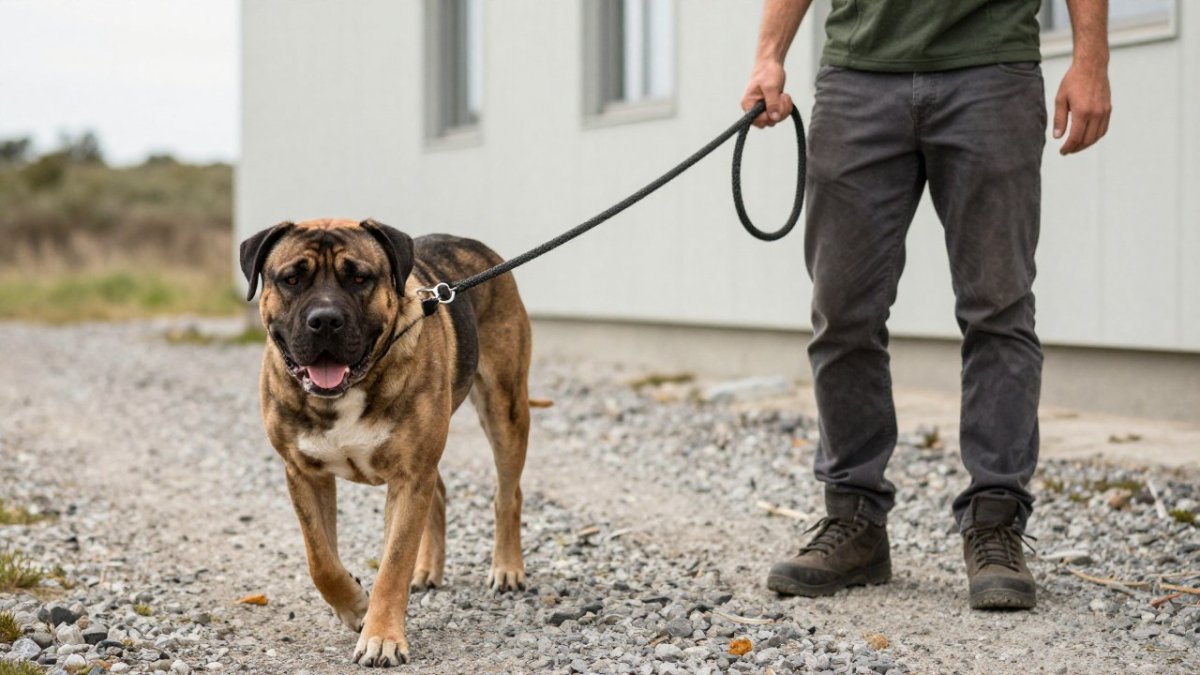
Your own strength matters as much as the dog's. A leash your dog can break is a problem, but so is one you cannot hold through a sudden lunge. Test the handle at home before a walk: hold it with your dominant hand, pull gently, and check how it sits across your palm.
Pulling behavior also changes the choice. A dog that lunges at other animals needs a secure clip and a leash you can lock quickly. A dog that pulls steadily on flat ground may be fine with a lighter, longer leash.
Inspecting, Replacing and Choosing Your Next Leash
Inspect your leash every few weeks. Check the webbing for fraying, the stitching at each end, and the clip for bending or sticky action. Replace the leash at the first sign of significant wear, not after it breaks.
Colossal Canine Co. offers a lifetime guarantee on its handmade gear. When you are ready to choose, start with the length and hardware your dog needs, then confirm the width and handle suit your grip. Visit colossalcanineco.com to view current options and get pricing.
Frequently Asked Questions
What is a strong leash for large dogs?
A strong leash for a large dog combines a load-bearing material, such as nylon webbing or a climbing-rope construction, with hardware rated to match. Look for a stated strength or tensile-load rating, a wide width (the 1/2-inch option is a common choice for dogs over 50 pounds), and a clip that locks. Strength ratings vary by manufacturer and test method, so compare them only when the test is described. Colossal Canine Co. builds leashes around military-grade webbing and solid stainless steel hardware for dogs over 100 pounds; check current specifications and pricing on the website.
Is a rope or nylon leash stronger for a large dog?
Both can be strong enough for a 100-pound dog, and the difference shows up in everyday conditions rather than on paper. Nylon webbing resists abrasion and holds its shape well, but it can stretch under sudden lunges. Climbing rope is dense and handles heavy loads, though it can feel stiff and may absorb water. Choose based on your dog's pulling style, the terrain you walk on, and how you handle the leash. Always confirm the hardware is rated for the same load as the strap.
What leash length is best for a large dog?
For everyday walks with a strong dog, a 4 to 6 foot leash gives enough room without letting a 100-pound dog build momentum before you can react. Longer lines of 10 to 30 feet suit training and open areas, but they are harder to control near traffic or other dogs. Retractable leashes are generally not recommended for dogs over 100 pounds because the locking mechanism and thin cord can fail under a sudden lunge.
How do I keep a strong dog from pulling on the leash?
Equipment helps, but handling matters more. Stop walking the moment the leash goes tight and only resume when the leash slackens. Reward a loose leash with a treat or a short break, and keep your grip with both hands when your dog is likely to surge, such as at squirrels or other dogs. A front-clip harness used alongside a sturdy leash gives you more steering control. If pulling persists, a certified trainer can assess your dog's pulling force and help you match equipment to your grip strength.
