blog · November 10, 2026
How to Choose an XXL Collar for a Mastiff
8 min read · Editorial Team
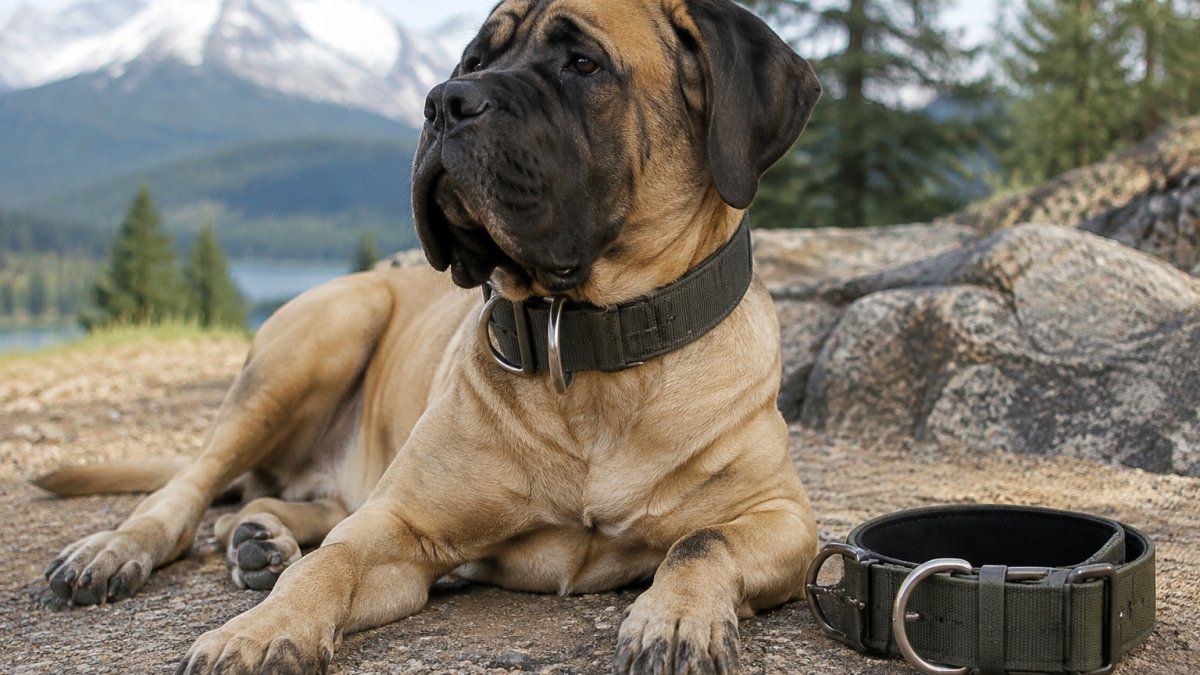
Quick Summary
To choose an XXL collar for a Mastiff, first measure the neck circumference with a soft tape at the thickest point below the ears, then add about two fingers of slack. Match that measurement to the collar's size range, and check that the webbing and hardware suit how strongly your dog pulls.
- Measure with a soft tape at the thickest part of the neck, below the ears.
- Add roughly two fingers of slack so the collar fits without choking.
- Recheck the measurement on a relaxed dog, not a tense one.
- Inspect the collar monthly for frayed webbing, loose stitching and stretched holes.
- A buckle collar suits daily walks, while a martingale or handle collar suits training.
Table of Contents
- Measuring Your Mastiff's Neck for an XXL Collar
- Choosing Materials for a Heavy-Duty Dog Collar for Large Breeds
- Martingale, Buckle, and Handle Collars: Which Suits a Mastiff
- Stainless Steel Hardware and Durability Under Pulling
- Getting Your Mastiff Fitted with the Right XXL Collar
- Frequently Asked Questions
Measuring Your Mastiff's Neck for an XXL Collar
Last Updated: November 9, 2026
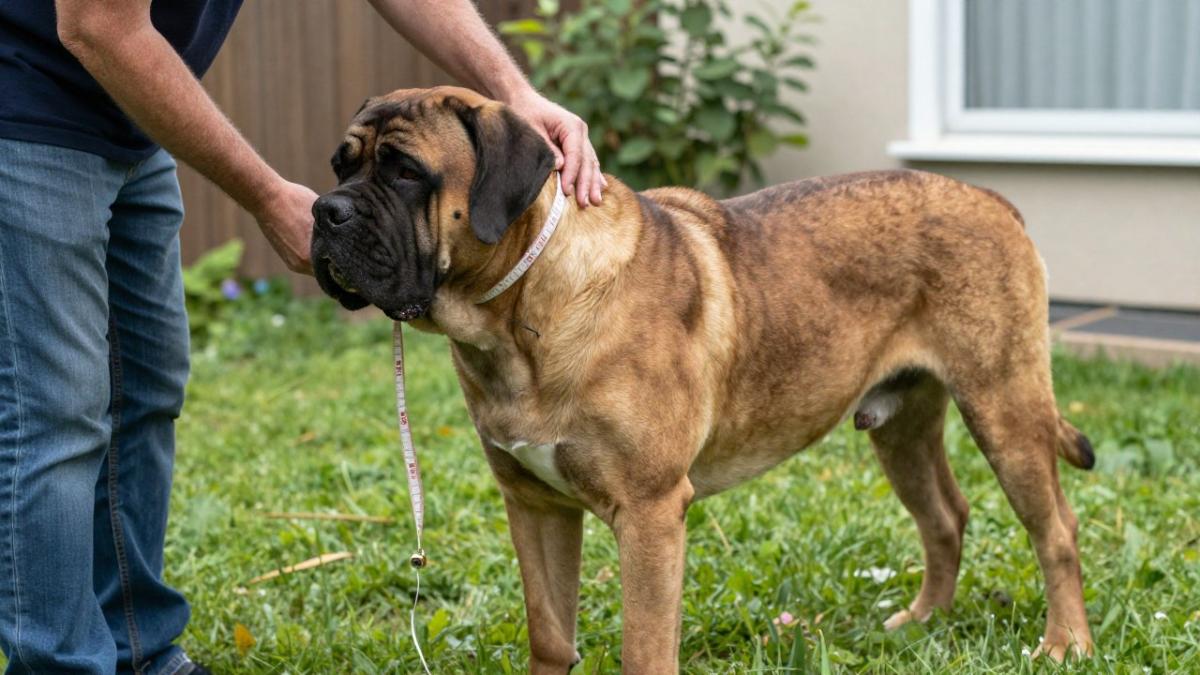
Getting the right XXL collar for a Mastiff starts with one number: the neck circumference. Owners often buy an XXL collar for a Mastiff by weight or by guesswork, then discover it is too tight to breathe comfortably or too loose to hold a lunging dog. Measure first, then shop.
Step-by-step neck measurement and fit check
Use a soft tape measure, not a string and ruler. Wrap the tape around the thickest part of the neck, usually just below the ears and above the shoulders. Keep it level, and slide two fingers under the tape so it is snug but not compressing the fur. Write down the number.
Then check the fit. Add roughly two fingers of slack to your measurement so the collar sits comfortably without choking. A Mastiff's neck often measures far larger than owners expect, so recheck the number on a relaxed dog, not a tense one.
Watch out: Measuring a dog who is pulling or tensing its neck gives a falsely small number, and the collar will then be too tight once the dog relaxes.
Here is a quick summary of the neck-measurement steps covered above.
| Step | What to do | Note |
|---|---|---|
| Measure neck | Wrap soft tape at thickest part, below ears | Keep level, two fingers under tape |
| Add slack | Add roughly two fingers of slack | Lets collar sit without choking |
| Recheck | Measure on a relaxed dog | Tense dogs give a falsely small number |
Choosing Materials for a Heavy-Duty Dog Collar for Large Breeds
A heavy-duty dog collar for large breeds needs webbing that resists stretching and tearing under sudden force. Standard pet-store nylon often frays after a few weeks of outdoor use with a strong dog. Military-grade webbing and solid stainless steel hardware are materials designed for heavy loads, which is why Colossal Canine Co. uses them. You can see heavy-duty collars sized for necks other collars give up on.
Material choice is not just about strength, it changes how the collar feels, how it ages, and how much maintenance it needs. Here is how the common options actually behave on a Mastiff:
- Nylon webbing. Light and easy to clean, but it can fray at cut edges. Look for heat-sealed or stitched ends.
Look for construction details, not just material names. Stitching should be heavy and reinforced at stress points, the D-ring attachment and buckle ends take the most load, and the edges should be finished so they do not fray.
Care and expected life vary by material. Inspect the collar monthly for frayed webbing, loose stitching, and stretched holes. A collar may need replacing sooner on a dog that lunges daily.
Watch out: A collar that looks thick and heavy is not automatically strong. Thick padding can hide thin webbing underneath, so check the strap itself, not just the outer layer.
Martingale, Buckle, and Handle Collars: Which Suits a Mastiff
Each collar type solves a different problem. A buckle collar is the everyday default and works well for dogs that walk calmly. A martingale collar tightens slightly when the dog pulls, which limits slipping out of a loose collar. A handle collar adds a grip point on top of the neck, giving you more control during sudden pulls or near traffic.
For a strong Mastiff, a buckle collar is a common choice for daily walks, and a handle collar or martingale can be used for training and higher-risk situations. If pulling is the main issue, a step-by-step plan for stopping dog pulling on leash walks through managing it. Skip the martingale if your dog has a very thick head relative to its neck, since the loop can tighten in ways that cause discomfort.
Stainless Steel Hardware and Durability Under Pulling
Hardware is where most collars fail first. Plastic clips crack under load, and cheap zinc alloy can bend or snap. Solid stainless steel hardware is the material used in Colossal Canine Co. collars.
Understanding the load path helps you inspect the right parts. When a Mastiff lunges, force travels from the leash, through the D-ring, into the stitching that holds the D-ring, along the strap, and into the buckle. Each of those junctions is a potential failure point, and the weakest one sets the collar's real limit, not the thickness of the strap.
A simple inspection routine goes a long way: once a month, run the collar through your hands, flex the buckle, tug gently on the D-ring, and look for frayed webbing, loose stitching, stretched holes, and corrosion. Replace the collar at the first sign of any of these, a collar is far cheaper than a lost dog.
Use the collar with care for a powerful dog. Never use a collar to lift or suspend a dog by the neck.
Watch out: A collar that has held up for months can fail suddenly if the stitching has been quietly degrading. Inspect before every high-risk outing, not just when something looks wrong.
Getting Your Mastiff Fitted with the Right XXL Collar
Once you have your measurement, browse our XXL collars for giant breeds, which use military-grade webbing and solid stainless steel hardware. Match the size to your neck measurement, check the fit range, and confirm the hardware rating matches how your dog walks. You can browse the full range of XXL collars sized for giant breeds and compare sizes and bundles in one place.
If you are unsure which collar fits your Mastiff, contact our team with your neck measurement and your dog's weight, and we will help you narrow the choice.
Frequently Asked Questions
How do I measure a Mastiff for an XXL collar?
Wrap a soft tape around the thickest part of the neck, where a collar would sit, usually just behind the ears and above the shoulders. Keep the dog standing square and relaxed. Add a finger's width of slack so you can slide two fingers under the collar. Compare the reading against the neck range listed on the product page, not just the collar length, because a Mastiff's neck is often much thicker than the average large-breed size chart assumes. If the measurement falls between sizes, choose the larger one and check fit after a few days of wear.
What size collar does a Mastiff need?
Most adult Mastiffs need an XXL collar, but the exact size depends on neck circumference rather than weight. Because fit ranges vary between manufacturers, always check the stated neck range against your own measurement. An adult dog with a thick, muscular neck may need a collar designed for extra-large necks.
Are leather or nylon collars better for a Mastiff?
Both can work well for a Mastiff. Check that the collar material is rated for large-breed loads, and look for sturdy construction for a powerful dog that pulls hard on walks.
Is a martingale collar suitable for a Mastiff?
A martingale collar can suit a Mastiff that pulls out of a standard buckle collar, because it tightens slightly under pressure without choking. It is a sensible choice for dogs with large heads relative to their necks. It is not a substitute for a secure primary collar on a dog that lunges hard.
