blog · November 20, 2026
Tactipup vs HugeHounds: Durability Comparison
10 min read · Editorial Team
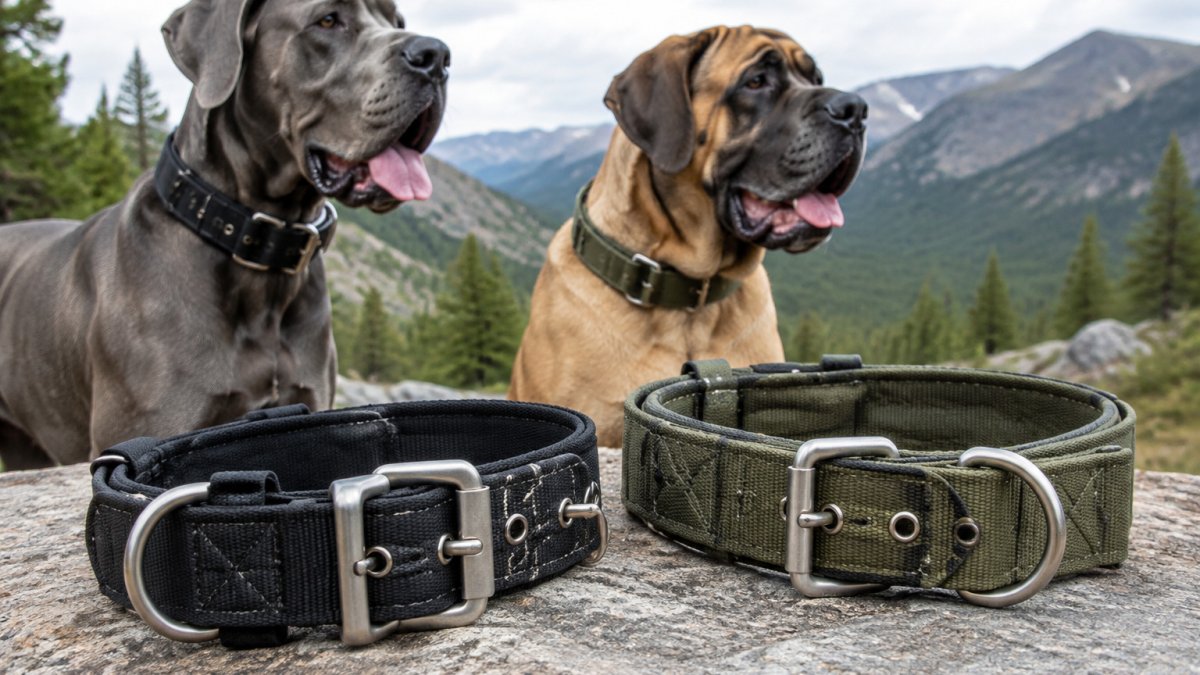
Last Updated: November 19, 2026
Quick Summary
A durability comparison of Tactipup and HugeHounds depends on webbing density, width, stitching pattern and hardware, and the available review data is too limited to declare a clear winner. Tactipup holds a mixed 3 out of 5 rating from 11 Trustpilot reviews, which does not isolate durability. Check each brand's stated materials, hardware and warranty before buying a collar for a dog over 100 pounds.
- Tactipup has a 3 out of 5 Trustpilot rating from 11 reviews, a small sample that does not isolate durability.
- Look for webbing at least 1 inch wide, since wider straps spread load across more yarns.
- Inspect the buckle prongs, D-ring and tag-ring rivets every few weeks for cracks or looseness.
- Retire any collar with faded, chalky webbing, since UV damage shows before the strap tears.
- Read the warranty terms to see whether they cover normal wear or only manufacturing defects.
Table of Contents
- What the Durability Comparison Can and Cannot Tell You
- Heavy-Duty Dog Collar Materials: Webbing and Stitching Compared
- Dog Collar Hardware Durability: Buckles, D-Rings and Failure Points
- Durable Dog Collars for Large Dogs: Fit, Growth and Breed Considerations
- Checking the Tactipup Collar Warranty and Choosing Your Collar
- Frequently Asked Questions
Choosing a heavy-duty collar for a dog over 100 pounds is not a casual purchase. A collar that fails under a lunge can turn a walk into an emergency. At Colossal Canine Co., we build collars and leashes for giant breeds, and this guide compares what matters when you weigh the Tactipup vs HugeHounds durability comparison for your own dog. The answers below rely on what each company publishes and what owners report.
What the Durability Comparison Can and Cannot Tell You
A durability comparison should answer one question: which collar keeps working after months of pulling, rain and tugging. The research available for this topic does not answer that cleanly. The customer-review picture for Tactipup is mixed rather than uniformly positive. Trustpilot lists Tactipup at 3 out of 5 from 11 reviews, which is a small sample and does not isolate durability or compare the brand with HugeHounds Trustpilot customer reviews for Tactipup.
Check how each brand describes its materials and hardware, and read owner reports from dogs of similar weight before you decide.
Heavy-Duty Dog Collar Materials: Webbing and Stitching Compared
Material is where most collars differ, so start here. Heavy-duty collars are usually built from nylon or polyester webbing, and three variables decide how much load the strap survives: weave density, webbing width, and how the strap is anchored at the stress points. A dense, tightly woven webbing resists abrasion and edge fraying far better than a loose weave of the same width, because loose weave lets individual yarns abrade against each other and against the buckle. Width matters too, a 1-inch strap spreads load across more yarns than a 3/4-inch strap, which is why most giant-breed collars sit at 1 inch or wider.
Ask each brand for its webbing width, its stated break strength, and whether the collar is stitched or riveted at the stress points. If a brand publishes only a "heavy-duty" label with no width or strength figure, treat that as a missing data point rather than a selling point.
Webbing strength and weather resistance
Nylon and polyester behave differently outdoors, and the difference compounds over months. For a dog that swims in salt water, works in mud, or spends long days in direct sun, those differences matter as much as raw tensile strength.
Environmental degradation follows a predictable pattern. Salt water leaves crystalline residue in the weave that abrades yarns as the collar flexes; mud packs into the weave and holds moisture against the strap; UV exposure breaks down polymer chains and shows up first as fading, then as a chalky surface, then as fraying at the edges. A common pattern is for a collar to look fine on the surface while the webbing under the buckle has already thinned. Rinse and air-dry after salt water or mud, and inspect the strap where it bends through the buckle rather than only the visible outer face.
Watch out: webbing that has faded to a chalky, dry texture has usually lost UV resistance and should be retired even if it has not yet torn.
Stitching patterns under sustained load
Stitching fails before most webbing does, and the pattern tells you where. A box-stitch (a rectangle with an X through it) at the buckle and D-ring anchor spreads load across four sides plus diagonals; a bar-tack, a dense, short run of zigzag stitching, reinforces a single high-stress point. Multi-row stitching along the length adds redundancy so a single broken thread does not cascade. A single line of straight stitching at a load point is the first thing to give way when a large dog lunges.
Thread type matters as much as pattern. If a brand does not describe its stitching pattern or thread, ask before you buy, and when the collar arrives, look for loose thread tails, skipped stitches, or stitch holes that have already enlarged at the D-ring anchor.
Dog Collar Hardware Durability: Buckles, D-Rings and Failure Points
Hardware fails in predictable places, and knowing the mechanism lets you inspect for it before a walk turns into an emergency. The three failure points are the buckle, the D-ring, and the tag ring, and each fails for a different reason.
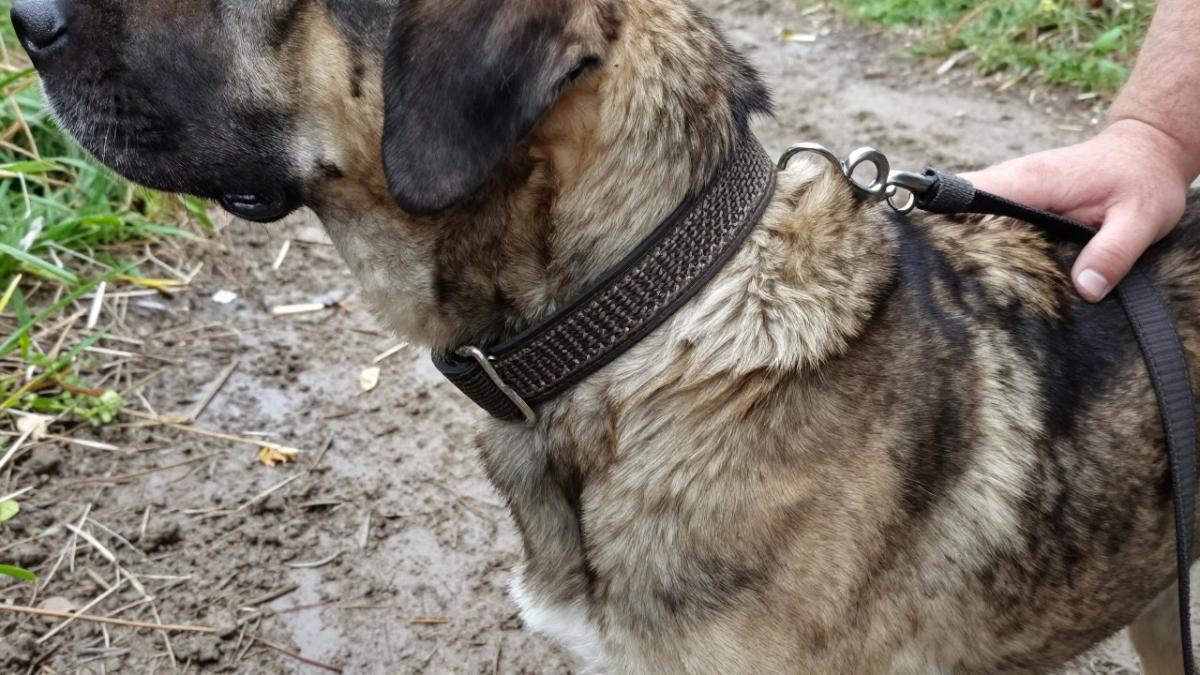
Buckle failure. On a side-release (quick-release) buckle, the weak points are the prongs and the female housing.
D-ring failure. A welded D-ring fails at the weld; a solid (unwelded) ring cannot fail there because there is no joint. To compare full collar builds with Chicago screws and safety buckles for a large dog, see Dog Collar for Cane Corso: What to Check in a Heavy Duty Collar for Large Dogs.
Tag-ring and rivet failure. The small tag ring is often the first thing to bend or open, and a loose rivet is a slow failure, it enlarges its hole in the webbing with every load cycle until the strap tears out around it.
Inspect the points of contact every few weeks. Repeated friction wears webbing where it passes through the buckle, so look for fraying, thinning, or a shiny worn patch on the strap at the buckle and at the D-ring anchor.
Watch out: a D-ring that has bent open under load will bend open again more easily the second time, retire the collar rather than bending it back.
The table below summarises where collar hardware fails and how to catch it early, as described above.
| Failure point | Typical cause | Check or fix |
|---|---|---|
| Buckle prongs | Crack at base from repeated opening and closing | Inspect prongs; replace collar if cracked |
| Plastic buckle housing | Cracks where strap loads the edge | Watch for cracks at the strap entry point |
| Metal buckle tongue | Wears a groove into the frame; roller seizes | Check for wear and a loose pin |
| Welded D-ring | Failure at the weld | Prefer solid rings; check for any opening |
| Rivet on tag ring or D-ring | Load concentrates on one fastener; hole enlarges | Check rivets every few weeks |
| Webbing at buckle | Friction thins and frays the strap | Look for fraying or a shiny worn patch |
| Bent D-ring | Opens more easily once bent | Retire the collar rather than bending it back |
Durable Dog Collars for Large Dogs: Fit, Growth and Breed Considerations
Fit matters as much as strength. A collar that is too loose can slip over the head, and one that is too tight loads the neck unevenly. For a giant breed puppy, adjustability is the practical question: a Mastiff or Great Dane can outgrow a collar within months, so sizing range and extra adjustment holes count for more than they would on a smaller dog.
Measure your dog's neck at the point where the collar will sit, and compare that figure against each brand's size chart rather than the label alone. For guidance on sizing an XXL collar for a Mastiff, see that step-by-step article. Neck measurements for very large dogs often exceed standard size ranges, so confirm the maximum size before you order.
Checking the Tactipup Collar Warranty and Choosing Your Collar
A warranty is only useful if you understand what it covers. Before buying from any brand, read the warranty terms in full, including what counts as a defect, how long coverage lasts, and what you must send back to make a claim. Use this guide to whether a lifetime guarantee on dog gear is worth the price to judge the warranty against what you pay.
To choose, work through three checks: confirm the webbing and hardware suit your dog's weight, verify the stitching and buckle design, and read the warranty before you pay. Current prices and warranty details change, so check each brand's website directly for today's terms. You can view Colossal Canine Co.'s collars and lifetime guarantee on our site before deciding.
What do you think makes a collar truly durable? Share your experience with the gear your giant breed has worn out.
Ready to find a collar built for a dog over 100 pounds? Explore Colossal Canine Co.'s handmade collars with military-grade webbing and solid stainless steel hardware.
Frequently Asked Questions
Which dog collar is more durable, Tactipup or HugeHounds?
The available evidence does not establish a verified durability ranking between Tactipup and HugeHounds. No independent side-by-side stress test or dated 2026 comparison was found. Owners of giant breeds should compare webbing width, stitching, hardware material and warranty terms directly, and check recent owner reports from dogs of similar weight before buying.
What are the most durable dog collars for large dogs?
Durable collars for large dogs generally combine wide, high-strength webbing, reinforced stitching at the attachment points, and solid metal hardware rated for load. Look for collars made for dogs over 100 pounds rather than standard pet-store sizes. Colossal Canine Co. builds its collars from military-grade webbing and solid stainless steel hardware, with Chicago style tacks for load-bearing strength. Check current specifications on the product pages before choosing.
Does collar hardware or webbing matter more for durability?
Both matter, and failure usually starts at the weakest point. Webbing can tear along its length or fray at the edges, while buckles and D-rings can bend, crack or work loose under repeated lunging. A strong webbing paired with cheap hardware will still fail. Inspect hardware for smooth, solid construction and check that stitching holds the hardware firmly in place, since the attachment point carries most of the load.
Is the Tactipup collar warranty worth checking before buying?
Yes. Warranty terms determine what happens if a collar fails, including whether claims are straightforward and what the coverage excludes. Read the written warranty on the Tactipup website and compare it with the lifetime guarantee offered by Colossal Canine Co. Note whether the warranty covers wear from heavy pulling, weather exposure or hardware failure, and ask the seller how claims are handled before you rely on the coverage.
