how-to · November 14, 2026
How to Stop a Strong Dog Leash from Slipping
10 min read · Editorial Team
Last Updated: November 13, 2026
Quick Summary
To learn how to stop a strong dog leash from slipping, fit the loop high behind the ears, set the stopper to head size, and choose textured webbing over slick nylon. For grip, run the lead across your palm and close a relaxed fist on the slack. Most slipping is fixed by fit and position, not a new lead.
- A slip lead only works when the loop sits high, just behind the ears.
- Set the stopper so the loop opens to roughly head size, then lock it.
- Never wrap the lead around your hand, since a lunge can crush fingers.
- A six-foot lead suits street walking for handlers of strong dogs.
- Heavy-duty leashes fail at the hardware and stitching, not the webbing.
Table of Contents
- Why Does My Slip Lead Keep Sliding Down?
- How to Use a Slip Lead to Stop Pulling
- How to Keep a Dog from Slipping Out of a Harness
- Dog Won't Stop Pulling on Leash Tried Everything? Fix the Grip
- Fitting and Sizing Checks for Heavy-Duty Leashes
- Choose Gear That Stops Leash Slipping Before It Starts
- Frequently Asked Questions
Why Does My Slip Lead Keep Sliding Down?
If you want to know how to stop a strong dog leash from slipping, the cause is usually a loop that's too loose, too low on the neck, or made from slick webbing that gives under tension. The fix is almost always fit and position, not a new lead.
Gear for dogs over 100 pounds often gets blamed for slipping, but the lead usually isn't broken, the loop has crept forward.
A slip lead tightens when your dog pulls and loosens when they don't. That only works if the loop sits high, just behind the ears, where the neck is narrowest.
Three things push a loop down the neck:
- A loop that's too large. Extra slack lets it slide forward.
- A stopper set too loose. The stopper caps how far the loop opens; it should limit the opening to roughly head size.
- Slick material. Shiny nylon glides over short coats; textured or padded webbing grips better.
Watch out: if the loop can slip over your dog's head while you're walking, the stopper is set wrong. That's an escape risk, not a training problem.
Three common causes push a slip lead's loop down a strong dog's neck, and each has a simple fix.
| Cause | Why it happens | Fix |
|---|---|---|
| Loop too large | Extra slack lets it slide forward | Fit the loop high, behind the ears |
| Stopper set too loose | Loop opens beyond head size | Set stopper to head size and lock it |
| Slick material | Shiny nylon glides over short coats | Use textured or padded webbing |
How to Use a Slip Lead to Stop Pulling
A slip lead stops pulling by applying brief pressure when the dog pulls forward, then releasing the moment the dog yields. The release teaches the dog; pressure alone just teaches discomfort.
Here's the sequence to follow:
- Fit the loop high. Slide it up so it sits behind the ears, not at the base of the neck.
- Set the stopper. Open the loop to head size, then lock the stopper there.
- Stand still. Let your dog hit the end of the lead. Don't pull back.
- Wait for the yield. The second your dog steps back or turns toward you, the pressure vanishes.
- Mark and reward. Say "yes" and hand over a treat.
- Walk on. Move forward the moment the lead goes slack.
Repeat until the pattern sticks.
For a fuller step-by-step pulling fix, see our guide on how to stop dog pulling.
How to Keep a Dog from Slipping Out of a Harness
Before adjusting a strap, confirm what's slipping.
Run this quick diagnostic:
- Lead slides through your hand. The problem is grip and leash material, not the harness. See the grip section below.
- Slip loop creeps down the neck. The problem is loop size, stopper tension, or slick webbing. See the slip-lead section above.
- Harness rotates or backs off the shoulders. The problem is harness fit and strap configuration. Keep reading.
A dog escapes a harness when the fit is loose at the chest, straps aren't adjusted to body shape, or the harness wasn't designed for a deep-chested breed.
Run these checks with the harness on the dog, not on the floor:
- Two-finger rule. Two fingers under every strap, no more. A strap that accepts a whole hand is loose enough to back out of.
- Chest panel position. It should sit on the breastbone, not the throat. If it rides toward the throat under pull, the front straps are too long.
- Shoulder clearance. Front straps shouldn't rub the armpits, rubbing means the harness sits too far back and can slide forward under load.
- Belly strap or second attachment point. These stop backing out. A back ring plus a single chest strap is a pull-control tool, not an escape-proof one.
Watch out: a harness that fits a standing dog can still fail when the dog plants its feet and backs up.
For a dog that escapes repeatedly, a backup collar and a second leash clipped to the harness can add a margin of safety.
Equipment compatibility matters. Metal clips from different brands don't always seat cleanly on each other's D-rings. Before trusting a backup, clip it on, load it by hand, and watch the connection.
If your dog has escaped a harness more than once, stop relying on the harness alone.
Dog Won't Stop Pulling on Leash Tried Everything? Fix the Grip
If your dog won't stop pulling on leash and you've tried everything, the problem may be your grip, not your dog.
Here's the grip we teach:
- Hand through the loop, thumb up. The loop goes around your wrist, not your fingers, a loop around the fingers can tighten and trap them under a hard lunge.
- Slide the lead across your palm. Let it run from the loop, across your palm, and out between thumb and index finger.
- Close your fist on the slack. This creates friction without a death grip; a relaxed fist outlasts a white-knuckle grip that fatigues in minutes.
- Second hand for backup. On a hard lunge, bring your other hand onto the lead above the first to share the load and stop it feeding through.
Never wrap the lead around your hand, if your dog bolts, that wrap can crush fingers or trap your hand.
Leash length changes the grip problem.
Material matters as much as technique. Slick nylon slides through a closed fist under load; textured, padded, or rubberized webbing gives your hand something to bite.
Gloves are a legitimate tool, not a sign of weakness. A thin leather or synthetic work glove improves friction on slick webbing and protects your palm from rope burn.
Sudden lunges are the real test.
Strong pullers also benefit from gear that won't stretch or slip under load. If your grip keeps failing, see strong leashes tested for pullers before changing technique.
Fitting and Sizing Checks for Heavy-Duty Leashes
Heavy-duty leashes fail at the hardware and stitching, not the webbing. Check those two places first, then check the fit.
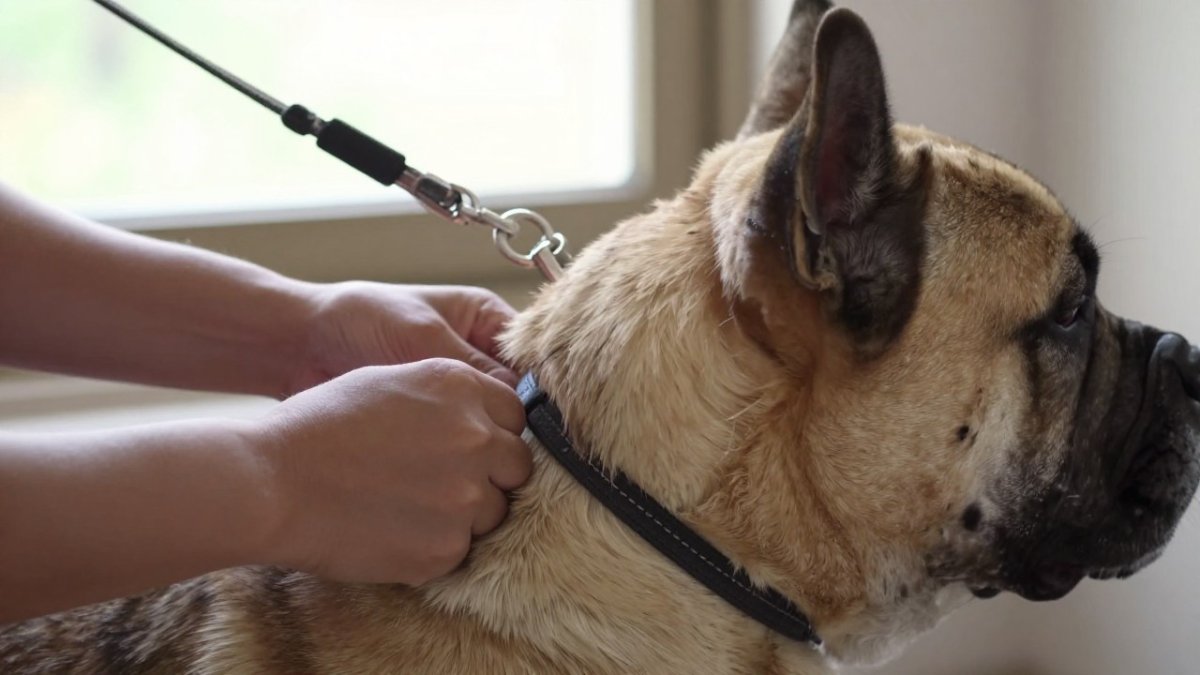
Run this checklist every few weeks, especially with a growing puppy:
- Neck measurement. Measure the widest part of the neck with a soft tape, then add room for two fingers.
- Hardware check. Look for bent D-rings, worn clips, or gaps in the metal.
- Stitch inspection. Check stitching where the lead meets the handle and clip. Fraying means retirement.
- Stopper tension. It should hold under a firm pull but still move by hand.
- Length check. A 10-foot lead gives a big dog room to move without giving you a running start.
If you're sizing a long lead for a giant breed, see the 10ft team color leash for available options.
Choose Gear That Stops Leash Slipping Before It Starts
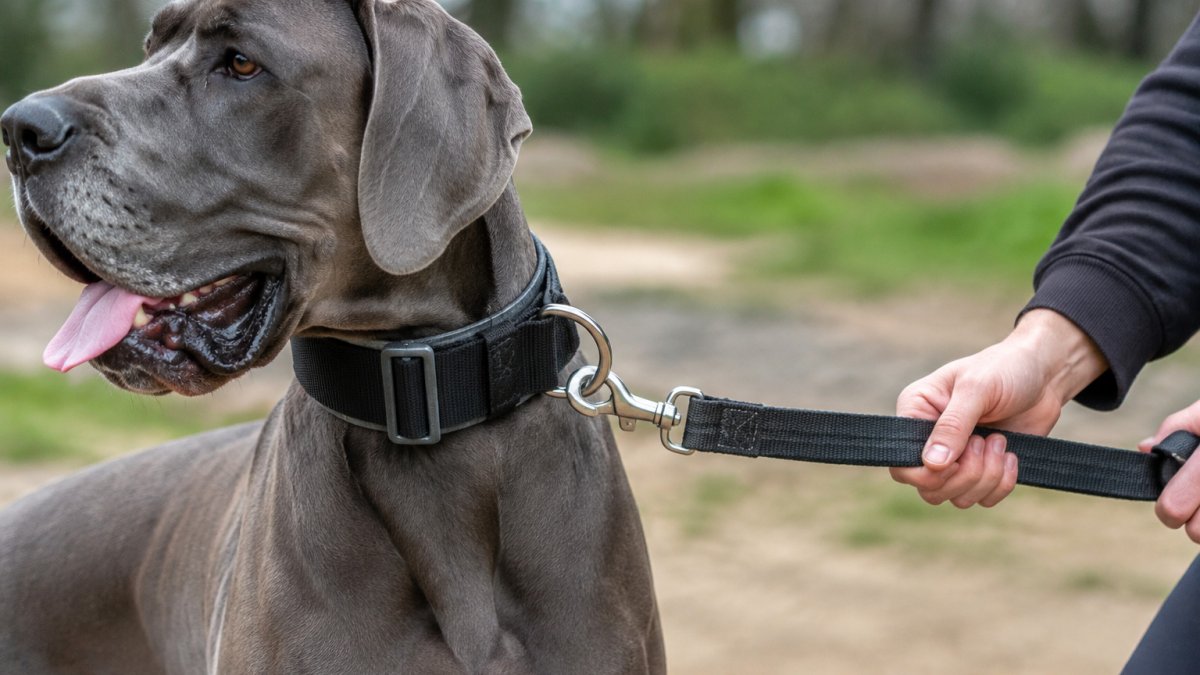
The best answer to how to stop a strong dog leash from slipping is gear built for the load. Standard pet-store leads are rated for average dogs. A 170-pound Mastiff is not an average dog.
We build our leads from military-grade webbing with solid stainless steel hardware, handmade to order. Every lead carries a lifetime guarantee.
Slipping is often a system problem. The lead, the collar, and the handler's grip can all contribute.
That's why we'd start with the whole setup. See the Gameday leash lineup and the giant breed gear guide for related options.
If your leash keeps slipping, your dog keeps escaping, or your grip keeps failing on a hard lunge, the gear is usually the weakest link.
Frequently Asked Questions
Why does my slip lead keep sliding down on my strong dog?
A slip lead slides down when the loop is too large or the stopper is not set. Measure your dog's neck at the widest point and size the lead so the loop sits high behind the ears with no slack. If the lead has a stopper, slide it tight against the loop once fitted. A secure stopper helps keep the loop from loosening mid-walk.
How do I hold a leash so a strong dog cannot pull it out of my hand?
Hold the handle with your thumb through the loop and fingers wrapped around the leash, not just hooked over it. Keep the leash across your body and your hand close to your hip. For a dog over 100 pounds, a second loop or a traffic handle gives you a backup grip. If the leash slipping is a recurring problem, switch to a lead with a padded handle and solid stainless steel hardware that will not stretch or loosen under load.
Are slip leads safe for dogs that pull?
Slip leads can be safe for pulling dogs when fitted correctly and used with supervision. The loop must sit high behind the ears, never on the throat, and must not tighten so far that it restricts breathing. Use pressure and release: apply gentle tension, then release the moment your dog stops pulling. Never leave a slip lead on an unattended dog, and pair it with a backup collar or harness for dogs that lunge.
What should I do if my dog slips its collar during a walk?
Stay calm and avoid chasing, which can turn into a game. Stop, call your dog with a cheerful tone, and reward them for coming back. Check the collar fit immediately: you should fit two fingers under the band, but a strong dog should not be able to back out of it. For dogs over 100 pounds, a martingale-style collar or a harness with a backup clip prevents escape. If leash slipping happens often, replace the collar with one sized for your dog's exact neck measurement.
