how-to · November 25, 2026
7 Mastiff Leash Laws and Safety Tips Every Owner Needs
10 min read · Editorial Team
Last Updated: November 24, 2026
Quick Summary
Mastiff leash laws apply wherever a local leash rule is in force, because the law almost never names a breed, it names a behavior. If your Mastiff is off-leash in a public space with a leash requirement, you are in violation, and the dog's size only makes the consequences worse.
- State-level leash laws are relatively uncommon, so the actual leash requirement usually comes from your city, county, or park district.
- A fixed-length lead with solid metal hardware suits a Mastiff better than a retractable lead, which can fail suddenly under tension.
- Train loose-leash walking by stopping the moment the lead goes tight and resuming when it slackens.
- When an off-leash dog approaches, put your body between the dogs, shorten your lead, and move away calmly.
- If a bite or attack happens, document names, vaccination proof, photos, and the scene, then report it to animal control.
Table of Contents
- Do Mastiff Leash Laws Apply to Your Dog?
- How Dog Leash Laws by State and City Actually Differ
- The Best Leash for a Mastiff: What Holds Up
- Mastiff Leash Training That Sticks
- What to Do When an Off-Leash Dog Approaches
- Gear Up for Walks That Hold
- Frequently Asked Questions
Do Mastiff Leash Laws Apply to Your Dog?
Yes: mastiff leash laws apply to your dog anywhere a local leash rule is in force, because the law almost never names a breed. It names a behavior.
That gap between what owners assume and what the law says is the whole problem. Many giant-breed owners believe their calm, slow-moving dog is exempt from leash rules. It isn't.
Journal of the American Veterinary Medical Association found that leash-related injuries tied to dog walking have increased, particularly among women over 65. One study, one warning, and it has almost nothing to do with breed.
The throughline: mastiff leash laws are not really about leashes. They are about control, and control is a gear problem and a training problem as much as a legal one.
Why Giant Breeds Face Extra Scrutiny
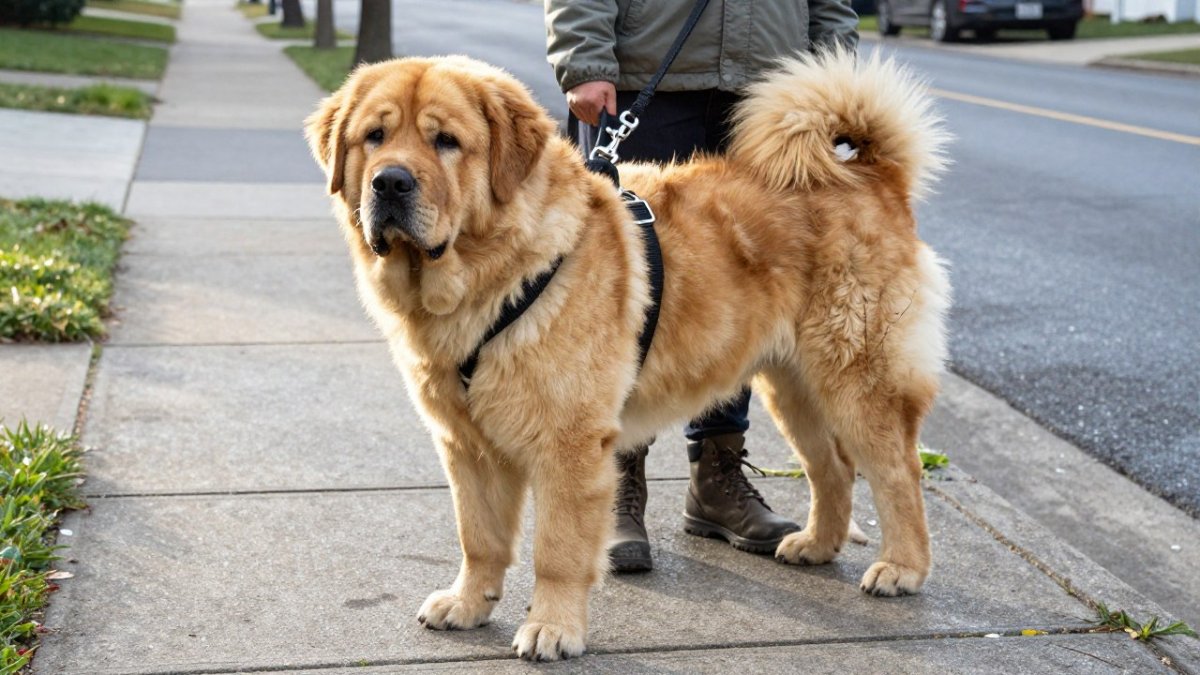
A 170 lb Mastiff is not a dangerous dog by default. It is a dog whose mistakes carry more weight.
That is why handlers, neighbors, and animal control officers watch giant breeds more closely. A lunge from a 40 lb dog is a nuisance. A lunge from a Mastiff can knock an adult off balance.
The CDC's guidance on dogs and bite prevention points to the same basics for every breed: socialize the dog, use a leash in public, and supervise. Nothing breed-specific. Everything size-amplified.
How Dog Leash Laws by State and City Actually Differ
Dog leash laws by state are less uniform than most owners assume. The Animal Legal & Historical Center's table of state dog leash laws notes that state-level leash laws are relatively uncommon. Many states instead rely on impound laws for loose dogs, leaving the actual leash requirement to cities, counties, and park districts.
In practice, that means four layers of rules can apply to one walk:
- State law: often about loose-dog impound, rabies control, and liability after a bite
- County or city ordinance: the actual leash requirement, fines, and animal control enforcement
- Park rules: many parks require a leash even where the city does not
- Designated off-leash areas: fenced dog parks where the leash requirement is lifted
Watch out: owners who check only their state law often conclude there is no leash rule at all. The rule is usually one level down.
A Practical Way to Check Your Local Rules
Here is a process, layer by layer, so you can document what applies to your Mastiff before a citation or incident forces the issue.
Step 2: Check the leash-length and equipment language. Some ordinances specify a maximum length, such as six feet; some require a "substantial" leash without a number; a few prohibit retractable leads in public spaces outright. Write down the exact wording, because enforcement officers apply the text as written.
Step 3: Check park and trail rules separately. City parks departments often publish stricter rules than the general ordinance.
Step 4: Confirm designated off-leash areas and their boundaries. Ask animal control or the parks department where off-leash areas are, whether they are fenced, and what the boundary rules are.
Step 5: Ask about enforcement and penalties in writing. Call animal control and ask three questions: What is the fine for a leash violation? Who enforces it? Is there a warning period or immediate citation? Ask for the answer by email and note the date, because rules and fines change and park districts update signage quietly.
Step 6: Log what you found. Keep a note with the ordinance number, the park rule, the date you checked, and the name of anyone you spoke with.
If you live near a county line or walk in multiple jurisdictions, repeat the process for each one.
Four layers of rules can apply to a single walk, so check each one before you head out.
| Layer | What it usually covers |
|---|---|
| State law | Loose-dog impound, rabies control, liability after a bite |
| County or city ordinance | The actual leash requirement, fines, enforcement |
| Park rules | Leash requirements even where the city has none |
| Designated off-leash areas | Fenced dog parks where the leash rule is lifted |
The Best Leash for a Mastiff: What Holds Up
A fixed-length lead made from heavy webbing with solid metal hardware, matched to a collar or harness that fits a thick neck, suits a dog this strong better than a retractable lead.
Why? A retractable lead puts a thin cord under tension between you and 150 lb of forward momentum. When it fails, it fails suddenly.
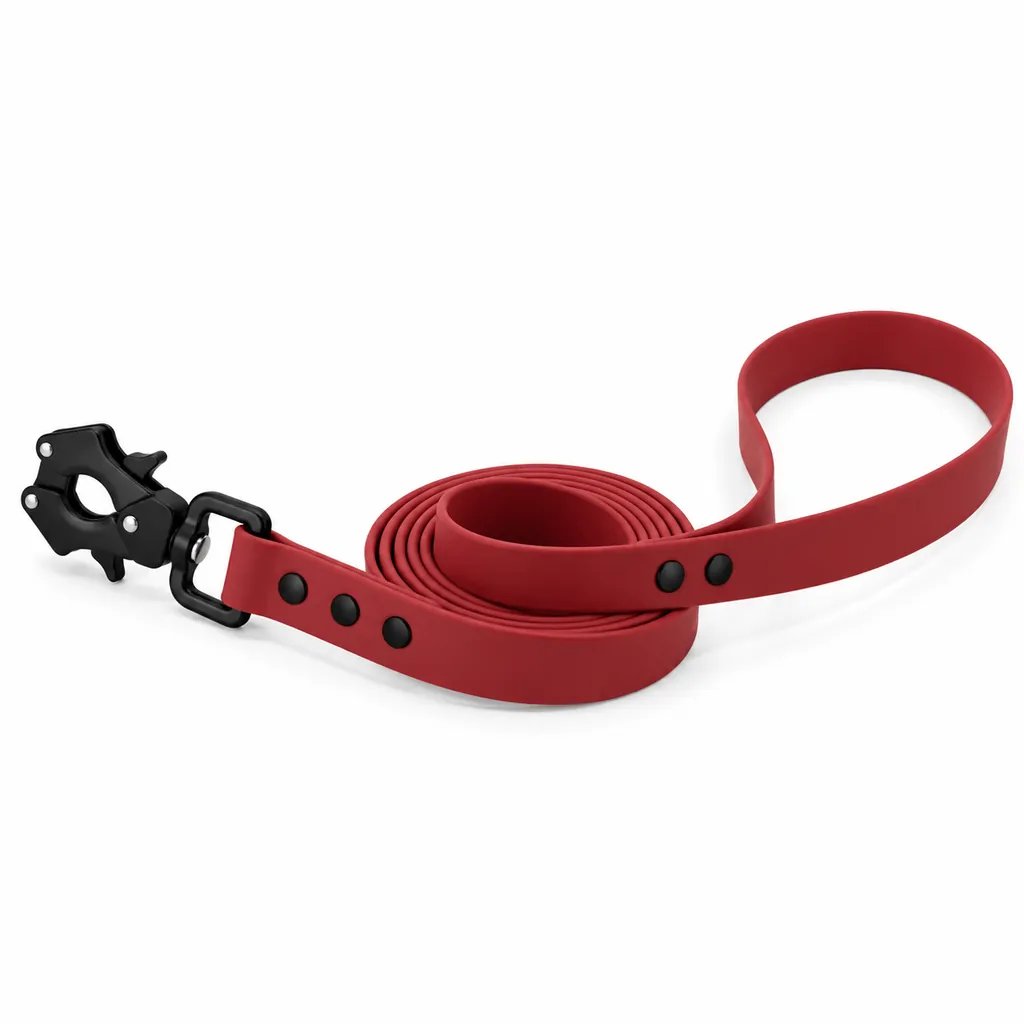
A fixed lead gives you a direct, predictable connection. Add a traffic handle near the collar and you can shorten the lead instantly when another dog appears.
For a deeper breakdown of lead styles and control, read our guide to leash length and control over 100 pounds. If you want a specific recommendation for a dog this size, see which leashes hold a 150lb Mastiff.
Sizing trips up most giant-breed owners. Measure your dog's neck with a soft tape and add room for two fingers before you shop.
Mastiff Leash Training That Sticks
Mastiff leash training works when you train the walk, not just the dog. Loose-leash walking, recall, and calm behavior around other dogs are three separate skills, and Mastiffs need all three before a public walk is safe. Once those skills are steady, keeping the leash from tangling around your Mastiff’s legs helps preserve control on a public walk, and dogsRtreed can help you think through that part of leash safety.
Start with duration, not distance. A ten-minute walk with a loose lead beats a mile of pulling.
- Reward the dog for walking beside you, not for walking ahead
- Stop moving the moment the lead goes tight, then resume when it slackens
- Practice recall indoors first, then in a fenced yard, then in public
- Keep sessions short and end on a success
A common mistake is expecting obedience to hold under distraction before it holds at home. Build the behavior where it is easy, then add the park.
For a full pulling plan you can follow week by week, use our step-by-step guide to stopping dog pulling.
What to Do When an Off-Leash Dog Approaches
When an off-leash dog approaches, put your body between the dogs, shorten your lead, and move away calmly.
Create distance first, then assess. Turn and walk away at an angle rather than backing up straight, because a Mastiff backing up cannot see where it is going.
Read your dog's body language before the other dog arrives. A stiff stance, a raised tail, a hard stare, or a closed mouth means intervene now, before contact.
Manage the leash tangle. If the leads cross, do not pull backward against the tension. Our article on stopping a strong dog leash from slipping covers the hold itself.
If a bite or attack happens, document it. Get the other owner's name, phone number, and proof of rabies vaccination if they will provide it.
Report repeat offenders with specifics. Animal control responds to patterns, not single complaints.
Watch out: do not try to separate fighting dogs with your hands or by grabbing collars.
Gear Up for Walks That Hold
Gear does not replace training or law. It buys you the seconds that matter when a 150 lb dog decides to move.
We build for that moment. Colossal Canine Co. makes heavy-duty collars and leads for giant breeds, using military-grade webbing and solid stainless steel hardware, handmade to order and backed by a lifetime guarantee. Chicago style tacks provide load-bearing strength.
Ready to upgrade? Browse extra-large collars, 1000lb-tested leashes, and bundles built for giant breeds.
Mastiff leash laws vary block by block, and your dog's size means every walk carries more risk than the average owner faces. That is not a reason to stay home. It is a reason to walk with gear that holds. Colossal Canine Co. builds collars and leads for dogs over 100 pounds, with military-grade webbing, solid stainless steel hardware, and quick-release safety built in.
Frequently Asked Questions
Does a dog have to be on a leash in its own yard?
It depends on where you live. Many cities and counties require dogs to be under restraint even on private property, and some impound laws apply to loose dogs anywhere. A physically secure fence usually satisfies control requirements, but invisible fences and tie-outs may not. Check your city and county ordinances directly, since mastiff leash laws and yard rules are set locally rather than by one nationwide standard.
Can a well-trained dog be off leash where leash laws apply?
No. A leash requirement applies regardless of how obedient your dog is. The law treats an off-leash dog as a violation whether or not it responds to recall. Use designated off-leash areas for free running instead.
How do I safely walk a strong mastiff?
Use a harness or wide collar rated for your dog's weight, a leash with metal hardware rather than plastic clips, and a two-hand grip with the leash loop around your wrist, not your fingers. Keep walks short and controlled while your mastiff leash training progresses. A dog that pulls is a real injury risk to the handler too.
What should I do if an unfamiliar dog approaches my mastiff?
Put your body between the dogs, shorten your leash, and move toward an exit without running or shouting. Do not let your mastiff greet the other dog, even playfully, since size differences make injuries likely. If a fight starts, avoid grabbing collars near the head. Report the incident to animal control afterward, because leash violation records matter if the other owner disputes what happened.
